THE DAHMER CASE: PUBLIC RECORDS DON’T MATCH THE STORY
The public records connected to the Jeffrey Dahmer serial murder case tell a very different story from the one most people know.
- A man described as a murder victim appears in publicly available arrest records and Facebook photographs years after he was supposedly murdered.
- Another alleged victim appears to have died before Jeffrey Dahmer was even born.
- Most of the alleged victims are missing from the Social Security Death Index.
- Public records connected to one of Jeffrey Dahmer’s addresses appear to list Milwaukee District Attorney Michael McCann as an occupant.
Something deeply strange is happening here.
The records below are public. Review them yourself.
identity and vital record contradictions
Alleged victim richard guerrero died in 1960
According to the official narrative, Jeff Dahmer murdered Richard Guerrero in 1988. However, public records show he died in 1960, months before Jeff was born.
Examine the death certificate, public records, and complete findings.

alleged victim "Eddie" Smith died in 1999
“Eddie” Smith, another alleged victim, is said to have been murdered by Jeff Dahmer. However, public records identify him as Ernest Richard Smith and show that he died in 1999—five years after Jeff himself was declared dead.
Examine the photographs, public records, and complete findings.

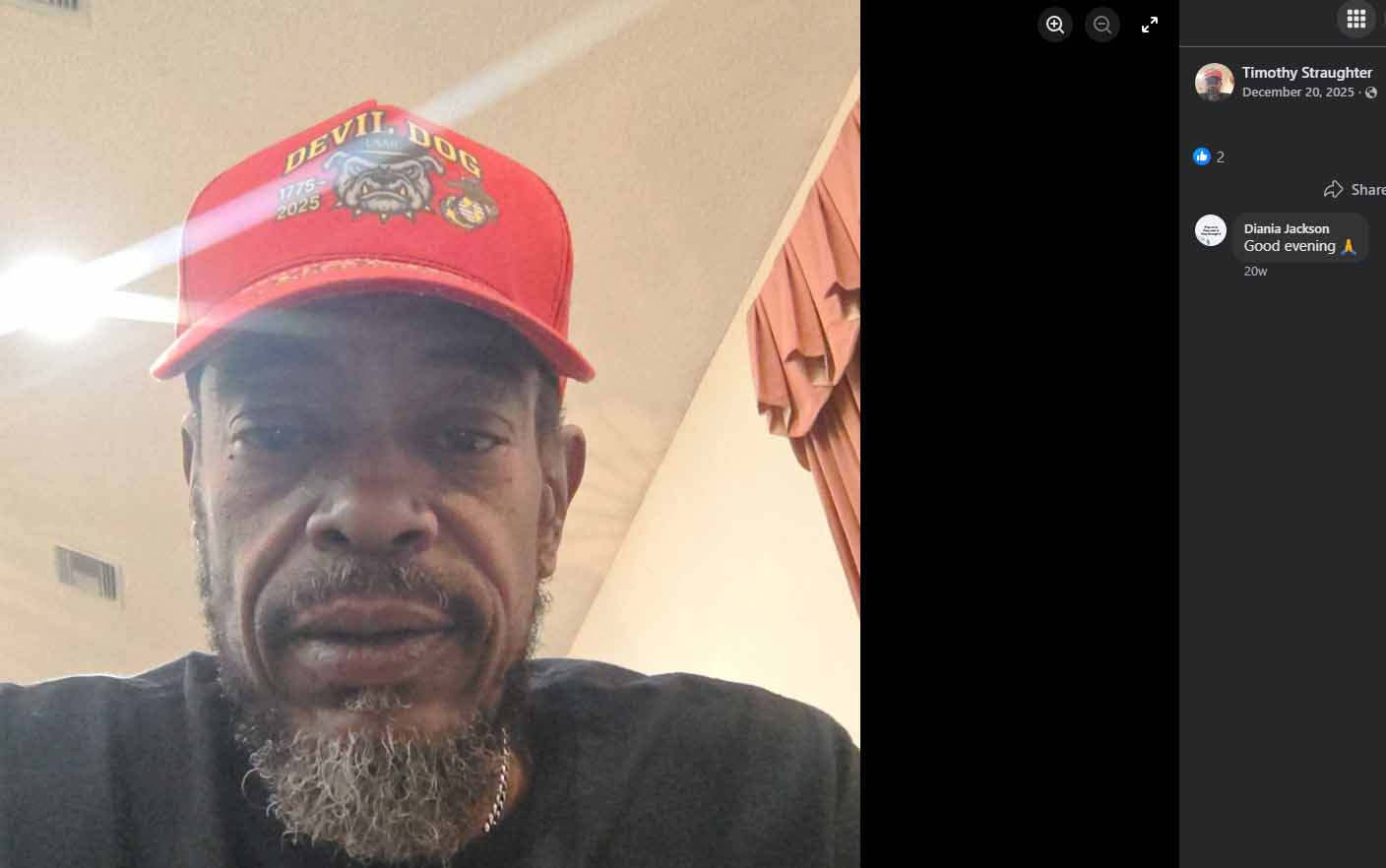
Alleged victim "Curtis" straughter is still alive as of 2025...and on Facebook
Public accounts identify “Curtis Straughter” as a man supposedly murdered by Jeffrey Dahmer in 1991. However, photographs and public records appear to connect that identity to Timothy Straughter, whose documented history continued long after his alleged murder.
“Konerak” Sinthasomphone Appears to be Somsack Sinthasomphone
We searched background checks, state databases, heritage records, and other public sources but found no official records for anyone named Konerak Sinthasomphone. The photographs commonly presented as “Konerak” appear instead to depict Somsack Sinthasomphone.
Examine the complete search for records on “Konerak” Sinthasomphone.
Compare the photographs and evidence identifying Somsack Sinthasomphone.

808 N. 24th Street was not Jeff Dahmer's Address
According to the official story, Jeff molested Somsack Sinthasomphone at an apartment at 808 N. 24th Street. However, property records list someone named Michael McCann—the same name as the District Attorney—as a tenant at that address. Jeff Dahmer’s name is not connected to 808 N. 24th Street in the public records we found.
Procedural & Forensic Anomalies
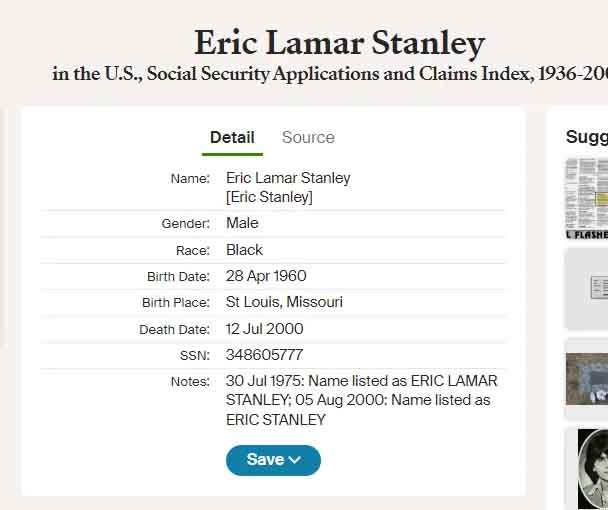
jeff dahmer's confession contains another man's SSN
The Social Security number on Jeff Dahmer’s confession belonged to Eric Lamar Stanley, an African-American man who died in 2000. The number can be independently verified through Social Security and genealogical records.
Examine the confession, Social Security records, and complete findings.
Jeff Dahmer's confession was not recorded or signed
More than 60 hours of alleged conversations with Detective Patrick Kennedy and other investigators produced no audio recordings or video footage. The confession was reconstructed from handwritten police notes and was never signed by Jeff Dahmer.
almost all victims are not in the social security death index
Fifteen alleged victims could not be found in the Social Security Death Index. Deaths may be reported to the Social Security Administration by relatives, attorneys, mortuaries, financial institutions, postal authorities, or state agencies. Yet no corresponding SSDI entries were found for these fifteen men.
That absence does not prove by itself that a person did not die. But fifteen missing entries in a single, nationally publicized case warrant closer examination—particularly when several of the identities present additional documentary problems.
Mugshots are missing
According to the official narrative, Jeff was arrested and convicted in 1986 for lewd and lascivious behavior, then arrested again in 1988 on felony sexual-assault charges. Yet no mugshot could be located for either arrest.
Documented Muscle Disease
Medical records indicate that Jeff Dahmer was diagnosed with polymyositis, a serious inflammatory muscle disease that can cause substantial weakness and fatigue. The diagnosis—and its possible effect on his physical capabilities—was largely absent from the public narrative.
Media & Institutional Context
Jeff quoted lines from a movie in his inside edition interview
In the 1993 Inside Edition interview, Jeff repeats dialogue word-for-word from a 1992 movie. These are not merely similar phrases—they are the same lines, presented as though they were Jeff’s own words.
Lionel dahmer signed a movie deal two months before the trial
Just four months after Jeff’s arrest—and two months before the trial began—Lionel Dahmer signed a deal for a movie based on the case.
Jeff Dahmer had a talent agent
Jeff Dahmer entered into an agreement with the Metropolitan Talent Agency—an unusual arrangement for someone presented to the public as a criminal defendant.
THE PORNOGRAPHY WARS CONNECTION
alleged victim JEREMIAH WEINBERGER WORKED FOR STEVE TOUSHIN
One of the most important discoveries in this investigation had nothing to do with crime scenes, confessions, or forensic evidence.
It involved Jeremiah Weinberger.
Most people know Weinberger only as one of Jeff Dahmer’s alleged victims. Few know that he worked for Chicago adult entertainment entrepreneur Steve Toushin—a man who had already endured years of federal surveillance, investigations, prosecutions, raids, and pressure during the government’s war on pornography.
That history makes Weinberger’s connection to Toushin difficult to dismiss as an incidental detail. Why does a supposed victim in a sensational crime story that appears to have been fabricated turn up inside the business of a man the federal government had pursued for years?
The deeper I looked, the less this resembled a coincidence—and the more the Weinberger–Toushin connection appeared to point toward a possible motive for the Dahmer story itself.
Read More: Were Jeff Dahmer and Jeremiah Weinberger FBI Informants?
Who created THE “MILWAUKEE CANNIBAL”?
When I first began investigating this case, I assumed the answer was straightforward. The Archdiocese of Milwaukee was facing growing scrutiny over clergy abuse allegations. What better way to push those stories off the front page than to replace them with one of the most sensational crime narratives in American history?
Key individuals connected to the Dahmer case—including DA Michael McCann, defense attorney Gerald Boyle, and assistant DA Gregory J. O’Meara—had ties to the Archdiocese. O’Meara would later become a Jesuit priest and rector of Marquette University.
Today, however, I believe that explanation may be incomplete.
My more recent research has focused on the Attorney General’s Commission on Pornography (1986), the federal anti-pornography movement, the prosecution of Chicago adult-entertainment businessman Steve Toushin, and Jeremiah Weinberger—one of Jeff Dahmer’s alleged victims and a former employee of Toushin’s company.
That research has led me to consider a different possibility. Perhaps the Jeffrey Dahmer story was not created primarily to protect the Archdiocese. Perhaps it was created as part of a much broader war on pornography and the culture surrounding it.
If so, the Archdiocese may still have benefited enormously. A story about a cannibalistic sex killer eclipses almost everything else in the news cycle. But the protection of the Church may have been a secondary effect rather than the primary objective.