How “Dahmer” Led Me Here: Why This Website Exists
I thought I was just another viewer. It took me a while to understand that I had become part of the machinery surrounding the story.
Like millions of other people, I watched Netflix’s ten-part Dahmer series. I accepted its premise, followed the narrative, and let the production do what it was designed to do: hold my attention.
What troubles me now is not simply that I believed it. I was entertained by it. A man’s life had been turned into a polished horror story, and I consumed it as one.
Only later, when I began looking at the record for myself, did I realize how much of what I had accepted depended on things I had never thought to question.
That realization is why this website exists. I cannot undo the fact that I once took part in the spectacle. But the story I was handed does not get the last word.
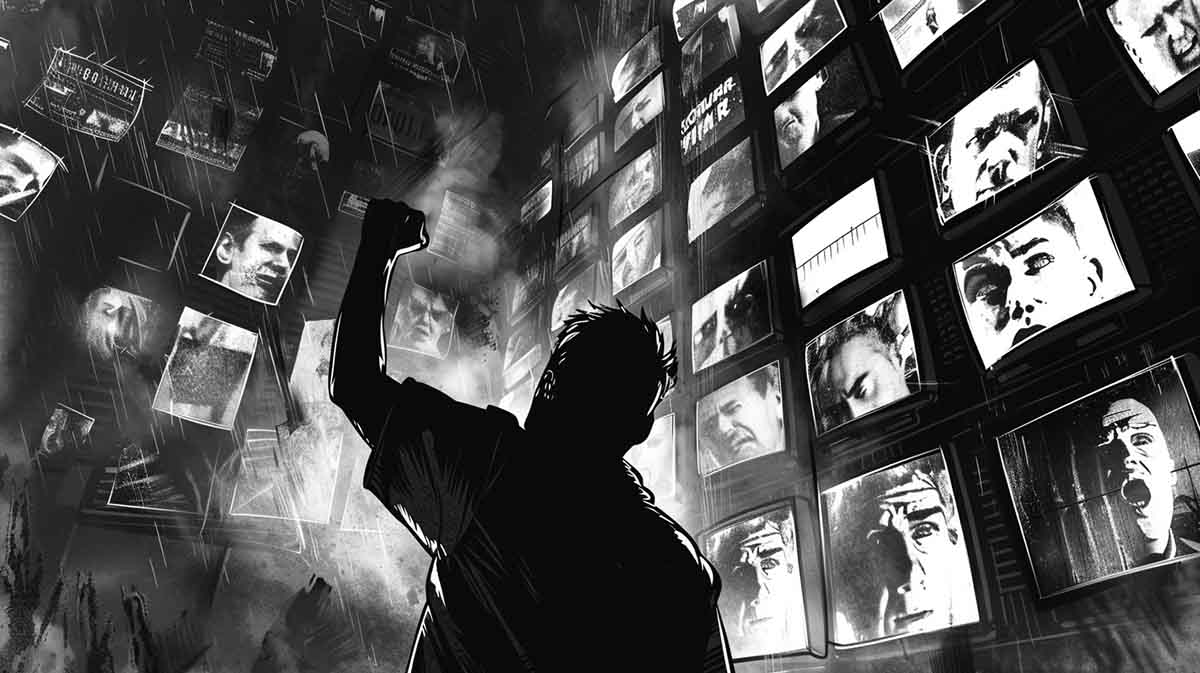
The “Dahmer” Story I Paid to Believe
I canceled Netflix once I became convinced that the story I had watched was not what it appeared to be. Canceling a subscription was easy. What followed was harder: trying to understand how a story of this magnitude had been constructed, repeated, and accepted.
The deeper I went into the records, the stranger they became. Jeff Dahmer’s supposed “confession” was not an audio or video recording of him confessing. It was a document typed by a detective from notes, and it contained a Social Security number belonging to someone else.
And those were not isolated problems.
I found questions surrounding the identity of Konerak Sinthasomphone. I found the 1960 death record for alleged victim Richard Guerrero. I found evidence that Curtis Straughter was alive years after he was supposedly murdered.
Then there are all the people connected to the Archdiocese of Milwaukee…
Gregory O’Meara is not simply a Jesuit priest who later wrote about Jeff. He served as an assistant district attorney during the proceedings and later became a rector at Marquette University. For years, his Marquette Leadership biography specifically mentioned his involvement with the Dahmer case. They presented it as a kind of feather in his cap. Recently, that reference disappeared from his Leadership bio.
Gerald Boyle, Jeff’s defense attorney, presents another curious overlap with the Archdiocese. Boyle worked as an attorney for the Archdiocese of Milwaukee and represented priests accused of sexual abuse. Yet when Boyle died in late 2024, his official obituary made no mention of Jeffrey Dahmer, even though the case was the most nationally famous of his career.
And then there is District Attorney Michael McCann. At one of Jeff’s alleged addresses, a reverse-address search found that there’s no record that anyone named “Jeffrey Dahmer” ever lived there. Instead, it lists someone named “Michael McCann.” The record doesn’t establish that this was Milwaukee County District Attorney Michael McCann. But McCann prosecuted Jeff, was a Catholic, and was a close friend of Archbishop Rembert Weakland. Of all the names that might have appeared at an address falsely attributed to Jeff, “Michael McCann” is a difficult one to encounter without stopping.
At some point, what had begun as a question about one television series became something else. The problem was no longer a single dubious detail. It was how many of them there were.
The Business of “Dahmer”
By the time Netflix released Dahmer, the story had already been circulating for decades.
Court TV had broadcast the proceedings. Books followed. Then came documentaries, television specials, podcasts, anniversary retrospectives, dramatizations, and eventually a ten-part prestige series built around the same familiar figure.
What struck me, once I began looking at the case differently, was how durable that figure had become.
“Jeffrey Dahmer” was no longer simply the name of a man. It was an intellectual property of sorts, endlessly reusable. His face could sell a documentary, a paperback, a podcast episode, a television series. Each new production inherited the assumptions of the last one and passed them along to the next.
With enough repetition, the story began to acquire the weight of something that no longer needed to be proved.
And there was money in keeping it that way.
The distinction between recounting a crime and commercially exploiting the person at the center of it becomes difficult to maintain when the person himself has been turned into a permanent cultural product. At some point, the story ceases merely to describe him. It begins to own him.
That is why I have come to think of the “Dahmer” industry differently. It’s not simply a collection of books, films, and television programs. It’s a system that depends upon the continued existence of a particular version of Jeff Dahmer.
I was once part of its audience.
That still bothers me.
I can’t undo the fact that I watched the Netflix series as entertainment. But I can go back to the record and ask whether the man being sold to us was ever the man who existed in the first place.