The Pornography Wars: Recommended Reading
For years, this investigation focused on the possibility that the story about Jeff Dahmer helped divert attention from the growing clergy abuse crisis within the Archdiocese of Milwaukee. While that remains an important line of inquiry, recent research has pointed toward a broader historical context: the anti-pornography crusade of the 1980s and early 1990s.
During this period, politicians, prosecutors, religious leaders, activists, and federal agencies waged an aggressive campaign against pornography and sexual expression. The movement culminated in the Meese Commission and a series of high-profile obscenity prosecutions targeting figures such as Steve Toushin.
The resources below document the institutional, cultural, and religious environment in which the Dahmer story emerged. Whether one views the case as a genuine criminal prosecution or a manufactured narrative, understanding this broader context is essential.
These resources are independent of this project. They are included because they provide valuable historical background and primary-source documentation.
why this matters
The anti-pornography movement was not merely a cultural dispute over adult entertainment. It involved federal commissions, obscenity prosecutions, religious organizations, media campaigns, and competing visions of morality and free expression. Understanding this history is essential to understanding why figures such as Steve Toushin became targets—and why the connections between Toushin, Jeremiah Weinberger, and the broader story about Jeff Dahmer deserve closer examination.
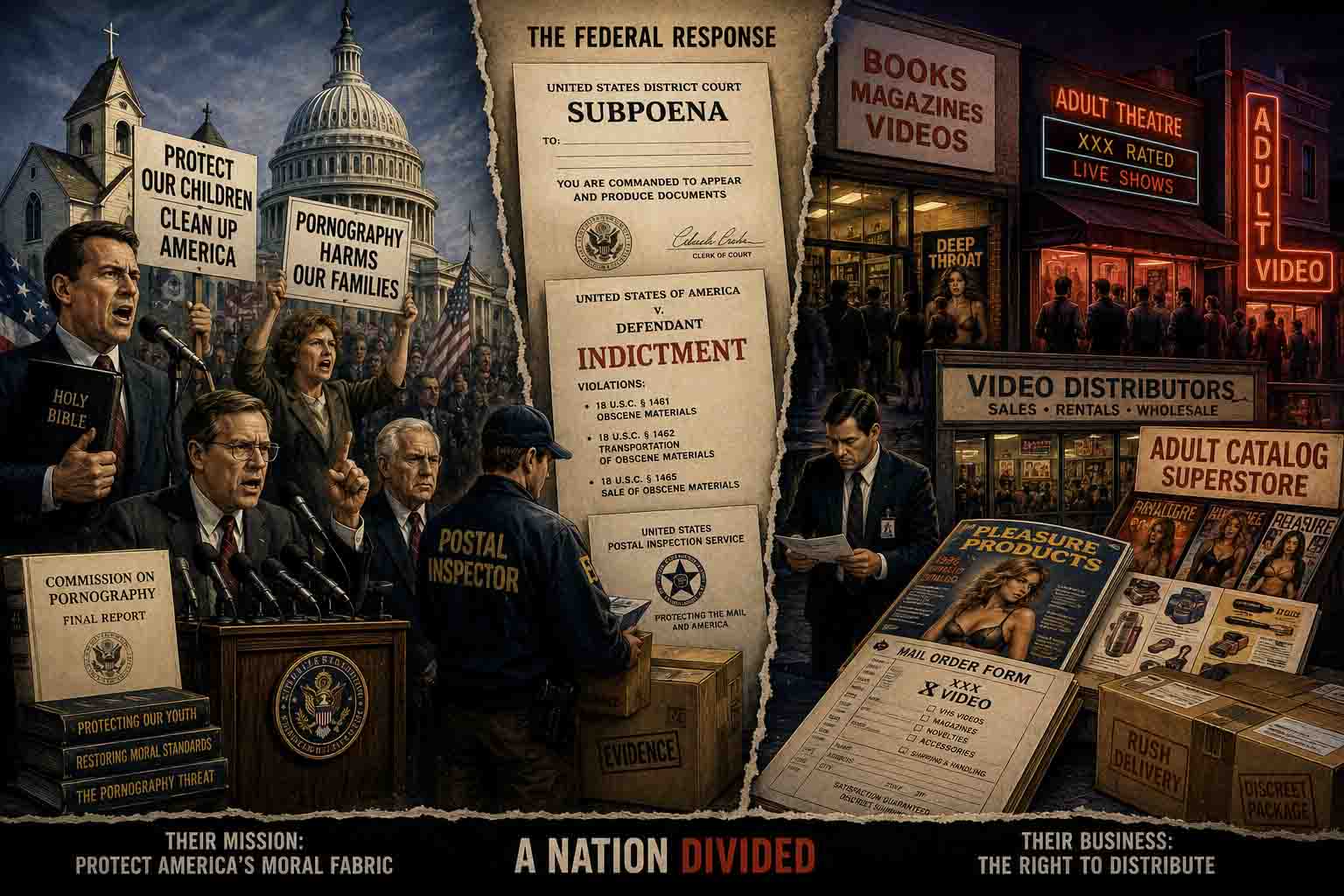
The Anti-Pornography Crusade
Meese Commission
The Meese Commission was established in 1985 by Attorney General Edwin Meese as the centerpiece of the federal government’s anti-pornography campaign. Its 1986 report argued that sexually explicit material contributed to violence, social decay, and criminal behavior, helping to shape a climate that justified aggressive obscenity prosecutions throughout the late 1980s and early 1990s. For readers seeking to understand the broader historical context surrounding Steve Toushin, federal anti-pornography efforts, and the cultural environment in which the Dahmer story emerged, the Meese Commission Report is an essential primary source.
steve toushin
Steve Toushin was one of the most prominent targets of the federal anti-pornography campaign that followed the Meese Commission. An adult entertainment entrepreneur, publisher, filmmaker, and outspoken First Amendment advocate, Toushin spent years battling obscenity charges brought by federal and local authorities. His legal fights made him a symbol of the broader conflict between anti-pornography activists and free speech advocates. For readers seeking to understand the political and cultural environment surrounding the Dahmer story—and the significance of alleged victim Jeremiah Weinberger’s employment with Toushin—his story is essential reading.
Pornography and Civil Rights: A New Day for Womens' Equality
Pornography and Civil Rights: A New Day for Women’s Equality is a collection of essays by legal scholar Catharine MacKinnon and feminist activist Andrea Dworkin, two of the most influential figures in the anti-pornography movement. Rather than treating pornography as a question of morality or obscenity, the authors argue that it constitutes a form of sex discrimination and a violation of women’s civil rights. The book helped shape the intellectual foundation of the anti-pornography movement and influenced debates over censorship, free speech, and gender equality throughout the 1980s and 1990s. Whether readers agree with its conclusions or not, it remains an essential text for understanding the ideas that influenced the Meese Commission and the broader campaign against pornography.
national center on sexual exploitation
The National Center on Sexual Exploitation (NCOSE)—formerly known as Morality in Media—is one of the most influential anti-pornography advocacy organizations in the United States. Founded in 1962, the organization has spent decades campaigning against pornography, obscenity, and what it describes as sexual exploitation in media and popular culture. NCOSE played an important role in shaping public discourse around pornography and continues to advocate for stronger legal and regulatory restrictions on sexually explicit material. For readers interested in the history of the anti-pornography movement, the organization provides valuable insight into the ideas, strategies, and arguments that have driven the campaign against pornography from the Meese Commission era to the present day.
Not a Love Story: A Film About Pornography
Not a Love Story: A Film About Pornography (1981) is a Canadian documentary that explores the pornography industry through interviews with performers, producers, activists, and critics. Released several years before the Meese Commission, the film captures many of the concerns that would later fuel the anti-pornography movement, including debates about exploitation, censorship, free expression, and the social impact of sexually explicit material. Whether viewed as a critique of pornography or as a reflection of the cultural anxieties surrounding it, the documentary provides valuable insight into the arguments and controversies that shaped the pornography wars of the 1980s.
Free speech / obscenity law resources
The anti-pornography movement did not operate in a legal vacuum. It relied on decades of obscenity law, court decisions, and ongoing debates about the limits of free expression. The resources below provide essential background for understanding the legal battles surrounding pornography, censorship, and the First Amendment—including the prosecutions that targeted figures such as Steve Toushin.
Clerical Abuse and Institutional Cover-Ups
A comprehensive and meticulously sourced archive of Catholic Church abuse cases worldwide. Names, dates, documents. Especially valuable for understanding how powerful institutions sanitize records and bury truths in plain sight. There’s a lot of information here about the Archdiocese of Milwaukee including The Sexual Abuse of Children in the Archdiocese of Milwaukee.
A grassroots support and advocacy network for survivors of religious and institutional abuse. Founded by survivors, run by survivors. Since 1988, they’ve been exposing what others prefer to forget.
The groundbreaking 2002 exposé that uncovered decades of child sex abuse and cover-ups within the Boston Archdiocese. This Pulitzer Prize–winning series exposed how the Catholic Church systematically protected predator priests—moving them from parish to parish and silencing victims. It shattered illusions and forced global accountability.
Book: Betrayal: The Crisis In the Catholic Church
Film: Spotlight
additional resources
An official initiative by the Wisconsin DOJ to investigate abuse by clergy and faith leaders. Survivors can report abuse, access resources, and view updates on the state’s ongoing efforts to expose systemic misconduct—especially relevant given the Archdiocese of Milwaukee’s central role in the story about Jeff Dahmer. If you’re outside the US, you will need to use a VPN to access the site