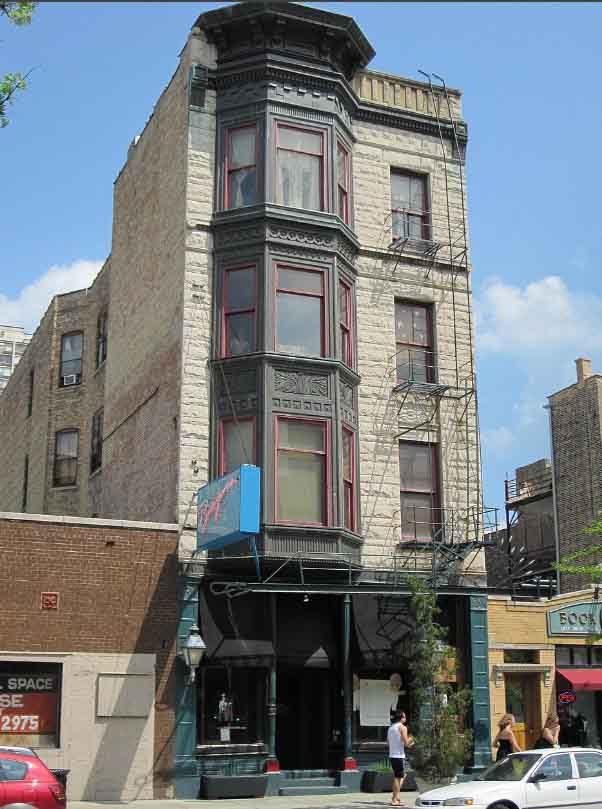
Jeremiah Weinberger: The Alleged Dahmer Victim at the Center of Steve Toushin's Federal Obscenity Case
Author’s Note, June 18, 2026
This article is not intended to establish that the Jeffrey Dahmer “serial killer” story was fabricated. That case is presented elsewhere on this website. Rather, this article explores a different question: if the accepted narrative is false, what might that tell us about Jeremiah Weinberger, Steve Toushin, and the federal anti-pornography campaign of the late 1980s and early 1990s?
Readers unfamiliar with the evidence that the Jeffrey Dahmer “serial killer” story was fabricated should begin with the Evidence section before continuing.
The Official Jeffrey Dahmer Story
According to the official narrative, Jeremiah Weinberger was one of Jeff Dahmer’s victims.
In July 1991, the twenty-three-year-old Chicago resident allegedly met Jeff Dahmer at a gay bar, agreed to accompany him to Milwaukee, and was never seen again. After Jeff Dahmer’s arrest, authorities claimed that Weinberger had been murdered inside Jeff’s apartment, becoming one of the most widely publicized victims in one of America’s most notorious serial killer cases.
For more than three decades, that explanation has gone largely unquestioned.
The story appears complete. A young man disappears. A serial killer is arrested. The mystery is solved.
But what if the story itself is wrong?
Readers who are new to this website should begin with the Evidence page, where I present the publicly available documentary evidence that led me to conclude that the Jeffrey Dahmer “serial killer” story was not what it appeared to be. Those pages examine court records, government databases, public documents, and other evidence that, taken together, led me to conclude that the accepted serial killer narrative about Jeffrey Dahmer was fabricated.
This article proceeds from that premise.
Accept that premise for a moment, and an entirely different question comes into focus.
If Jeff Dahmer did not kill Jeremiah Weinberger, then what became of him?
The moment that question is asked, Jeremiah Weinberger ceases to be a victim and becomes a mystery.
Because once the death-by-serial-killer explanation is removed, Jeremiah Weinberger’s story is no longer finished. It has to be reopened.
And when it is reopened, something unexpected happens.
The trail does not begin in Milwaukee.
It begins in Chicago, with a controversial adult entertainment entrepreneur and First Amendment activist named Steve Toushin and a young man who, according to Toushin, spent months trying to get a job at his company.
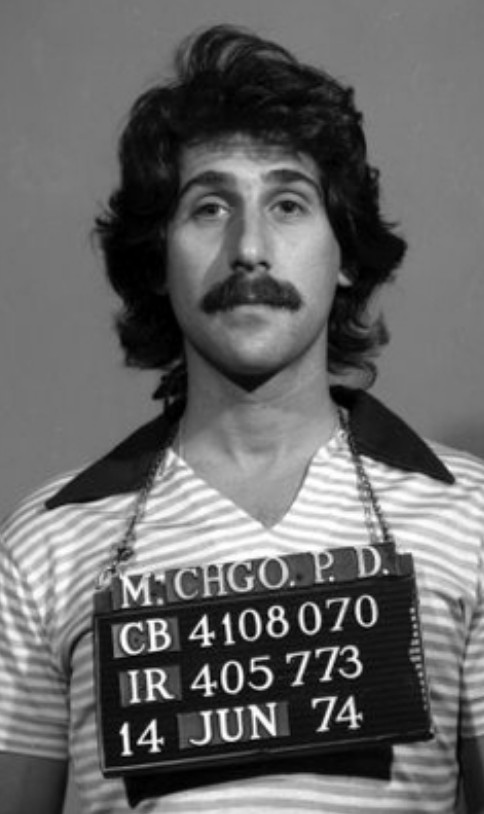
1985: America Declares War on Pornography
To understand Jeremiah Weinberger, Steve Toushin, and Jeff Dahmer’s story, it is necessary to understand the world in which it unfolded.
The 1980s were not simply a decade of economic conservatism and Cold War politics. They were also the years of a growing moral crusade against pornography.
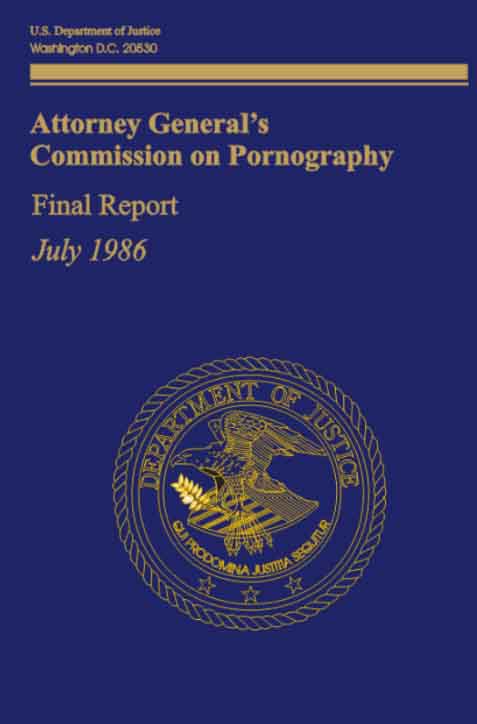
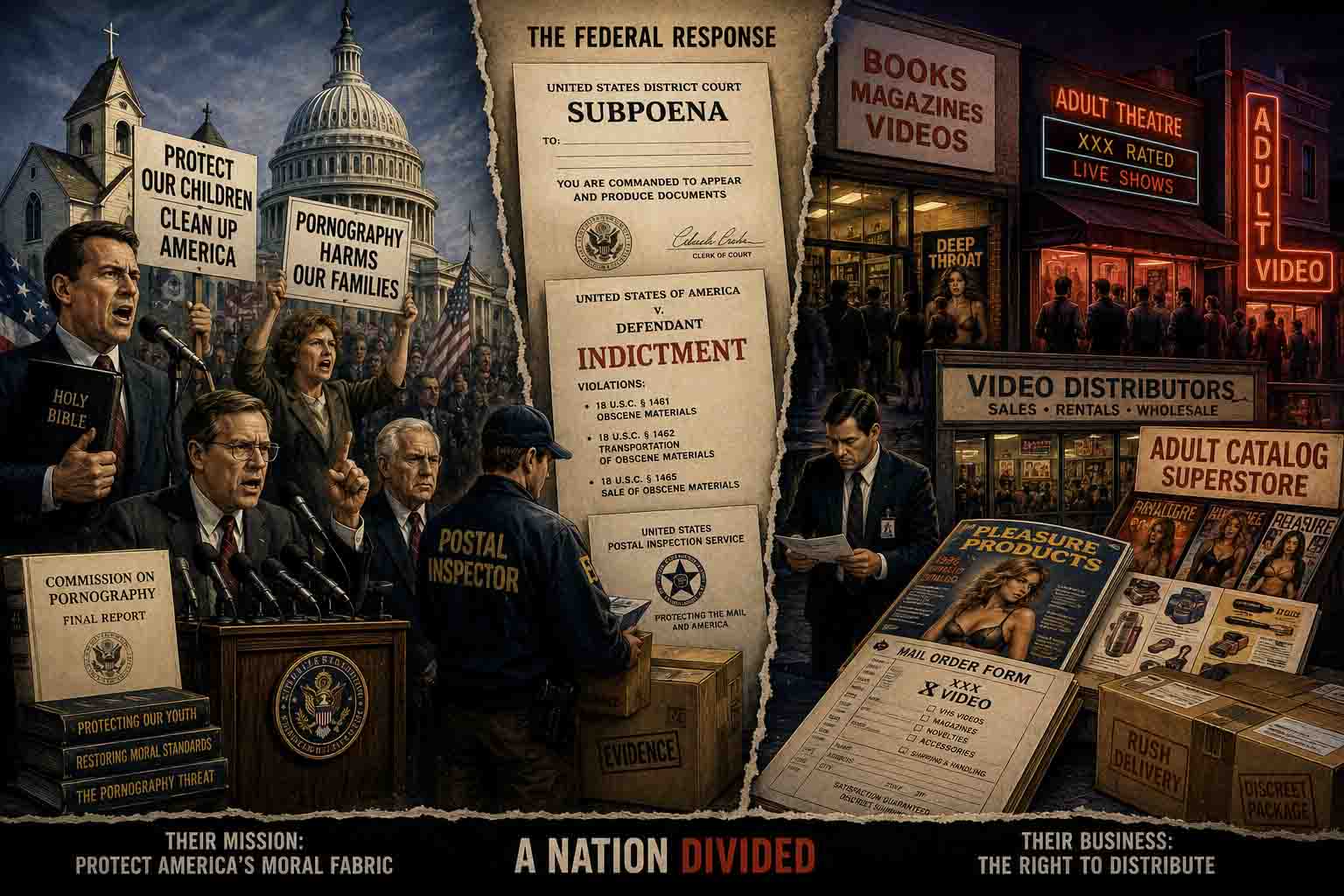
In 1985, Attorney General Edwin Meese III established the Attorney General’s Commission on Pornography, better known as the Meese Commission. The commission’s purpose was straightforward: investigate the pornography industry and determine its effects on American society.
Its members included psychologist Judith Becker, forensic psychiatrist Park Dietz, and Father Bruce Ritter, the founder of Covenant House. Several years later, Becker and Dietz would reappear in the Jeff Dahmer trial—Becker as a defense witness and Dietz as one of the prosecution’s best-known experts. Ritter’s career followed a different path. In 1990, he resigned from Covenant House after multiple young men accused the Catholic priest of sexual misconduct.
The commission’s final report was released in July 1986, and the conclusions were dramatic.
The report argued that pornography contributed to violence, sexual crime, the degradation of women, and the erosion of public morality. The report called for stronger enforcement of obscenity laws and a more aggressive response from law enforcement agencies.
For supporters of the commission, pornography was not merely offensive. It was harmful. It was a social problem that demanded action.
For those in the adult industry, the report signaled something else entirely.
It signaled that the federal government was preparing for war.
The goal was not simply to regulate pornography. The goal was to prosecute the people who produced it, distributed it, and profited from it. Federal prosecutors, postal inspectors, and law enforcement agencies began focusing increasing attention on the adult industry, particularly businesses that relied on interstate mail-order distribution.
A catalog sent across state lines could become the basis for a federal investigation. An advertisement mailed into the wrong jurisdiction could trigger criminal charges. Postal inspectors began placing orders under fictitious names, using post office boxes and money orders to purchase materials that prosecutors would later argue were obscene.
The strategy was straightforward.
Identify a target.
Order the material.
Create a paper trail.
Build a case.
Steve Toushin’s business found itself squarely in the path of this expanding campaign.
In Chapter 4 of The Destruction of the Moral Fabric of America, Steve Toushin states that all of the charges eventually brought against him originated in 1986 and 1987, immediately after the Meese Commission’s Report on Pornography became public. He described his business as one of those selected for what he called the commission’s first major sting operation.
It was in the middle of this anti-pornography campaign that a young man named Jeremiah Weinberger entered Steve Toushin’s world.
Steve Toushin Enters the Crosshairs
Steve Toushin was not a marginal figure in the adult entertainment industry.
By the time federal prosecutors turned their attention to him, he had spent years building a business that operated at the center of several of the most controversial debates in America.
Toushin – who is straight – was the owner of Bijou Video and the Bijou Theater, businesses that specialized in gay adult entertainment. Through mail-order catalogs, films, theaters, and distribution networks, Bijou reached customers far beyond Chicago. Its products included not only conventional gay pornography but also BDSM films that would later become a focal point of federal obscenity prosecutions.
The business attracted attention.
So did Toushin.
Over the course of his career, he was arrested repeatedly. His businesses were raided. Obscenity charges were filed in multiple jurisdictions. Authorities conducted hundreds of enforcement actions against his companies over the years.
The pressure was not confined to Chicago.
Federal prosecutors pursued cases against him in several states. Grand juries were convened. Indictments were returned. Court battles stretched across years. Eventually, Toushin would serve time in federal prison.
By the late 1980s, Steve Toushin had become something more than a businessman.
He had become a symbol.
To supporters of the anti-pornography movement, he represented an industry they believed was harming the moral fabric of the country. To civil libertarians and free speech advocates, he represented a growing effort by the government to police expression through criminal prosecution.
Either way, he was impossible to ignore.
And it was during these years—while prosecutors, postal inspectors, and grand juries were converging on the adult industry—that a young man named Jeremiah Weinberger kept returning to Bijou Video in search of a job.
At first glance, the two stories seem unrelated.

Jeremiah Weinberger: The Young Man Who Wanted In
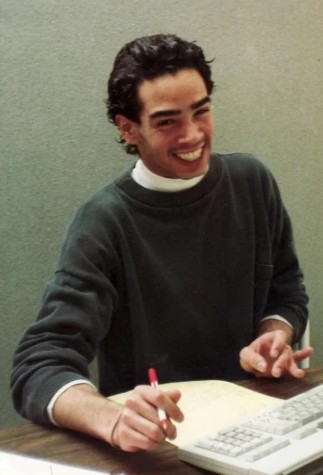
According to Steve Toushin, Jeremiah Weinberger did not arrive at Bijou Video through a help-wanted advertisement or a formal application process.
Instead, he simply kept showing up.
In Chapter 29 of The Destruction of the Moral Fabric of America, Toushin recalled that Jeremiah first appeared at the company’s offices in 1985 looking for work. At the time, Toushin says, he had no openings and sent him away.
Jeremiah returned.
Again, Toushin told him there were no jobs available.
He returned a third time.
Then a fourth.
According to Toushin, this pattern continued for months.
Most job seekers eventually move on. They find work elsewhere. They stop asking.
Jeremiah did not.
As Toushin remembered it, the young man remained remarkably persistent. No matter how many times he was turned away, he kept coming back to Bijou Video in search of a position.
I first met Jeremiah Weinberger in 1985. He was a young, slim, handsome mulatto boy who started coming to the Bijou office every week. Sometimes I would see him outside, other times he would be in the office. He always seemed to be around, and he was always asking me for a job. It didn’t matter what kind of job – janitorial, receptionist, inventory, or something else. Every week I had to tell him there was nothing available. Six or seven months of dedicated persistence went by, and Jeremy didn’t miss a week.
One day, during his weekly visit, I took him into my office, sat him down, stared at him for a moment, and then told him to come back the next day because he was going to start doing the mailings. (Chapter 29, The Destruction of the Moral Fabric of America)
Eventually, Toushin relented and hired Jeremiah Weinberger to do mailings.
Most readers will see nothing unusual in this story. A young man wanted a job and eventually got one.
Yet viewed from another angle, the story becomes more curious.
Jeremiah was not repeatedly seeking employment at an ordinary business. He was seeking employment with Steve Toushin—a man who was already attracting the attention of prosecutors, postal inspectors, and investigators involved in the growing anti-pornography campaign. As federal authorities intensified their focus on the adult industry, Toushin was becoming one of the movement’s most visible targets.
This does not prove anything. But it does transform a simple employment story into a question.
Why was Jeremiah so determined to work for Steve Toushin?
Years later, Toushin would remember the persistence. He would remember the repeated visits. He would remember finally giving the young man a chance.
What he could not have known at the time was that Jeremiah Weinberger would later become one of the most recognizable names associated with the Jeff Dahmer “serial killer” story, which appears to have been fabricated.

Jeremiah Weinberger's Role at the Bijou
When Steve Toushin finally agreed to hire Jeremiah Weinberger, he did not assign him to janitorial work or place him in some isolated corner of the business.
According to Toushin, Jeremiah went to work in the office.
His duties included answering telephones, filing paperwork, assisting with customer service, and handling mailings. Before long, he had become part of the day-to-day machinery that kept Bijou Video operating.
That distinction matters.
The federal cases that would later be brought against Toushin did not revolve around what happened inside a theater. They centered on catalogs, mailings, orders, shipments, and the movement of materials across state lines. The government’s case was built on the operational side of the business.
That was also the part of the company where Jeremiah worked.
The coincidence may be entirely innocent. Yet it is difficult to ignore. The young man who spent months trying to gain employment at Bijou ultimately found himself working in precisely the area of the business that later became central to the federal prosecution.
Toushin’s description of Jeremiah is strikingly affectionate. He portrays him as dependable, eager, and deeply invested in the company. Jeremiah wanted to belong. He wanted responsibility. He wanted to be useful. According to Toushin, he embraced the work immediately.
He also formed an unusually close friendship with another Bijou employee named Teddy Jones.
In his book, Toushin devoted considerable attention to that relationship. Jeremiah and Teddy, he wrote, became best friends. More than that, Toushin claimed that Jeremiah rarely made a significant decision without first discussing it with Teddy. In Toushin’s telling, Teddy knew almost everything that was happening in Jeremiah’s life.
This may seem like a minor detail.
Yet Toushin repeats it often enough that it begins to stand out.
If Jeremiah occupied an important position inside the company’s daily operations, and if Teddy was indeed the person he consulted before making major decisions, then Teddy occupied a uniquely privileged position as well.
The detail is worth noting because many of the events surrounding Jeremiah’s disappearance would later be filtered through Teddy’s recollections.
The Shipment That Triggered the Federal Case Against Steve Toushin
At some point, the federal government’s long-running campaign against Steve Toushin finally found the case it was looking for.
According to Toushin, the films at the center of the prosecution were not supposed to have been shipped at all.
Years later, reflecting on the shipment that helped trigger the federal prosecution against him, Toushin wrote in Chapter 2 of The Destruction of the Moral Fabric of America:
“I had actually taken them off the market six months before the postal inspectors ordered them. Someone in my customer service department wasn’t paying attention and decided not to follow the posted rules. He took orders for the Slave and Master films and shipped them out.”
The shipment mattered because federal obscenity law depended heavily on interstate commerce.
Postal inspectors placed orders.
The films were shipped across state lines.
The shipment gave federal prosecutors exactly what they needed: a case built on materials that had crossed state lines.
What makes the passage noteworthy is what it does not say.
Toushin never identifies the employee who ignored the rules, processed the orders, and shipped the films.
That omission may be insignificant. The events had occurred years earlier, and he may simply have chosen not to include the person’s name.
Yet if Jeremiah Weinberger was the employee in question, another possibility exists.
By the time Toushin wrote his book, Jeremiah had long since become known as one of Jeffrey Dahmer’s alleged victims. Throughout the book, Toushin describes him with obvious affection. He portrays him as eager, warm, loyal, and deeply invested in the company.
If that is how Toushin remembered him and if Toushin believed that Jeremiah was murdered by Jeff Dahmer, publicly identifying Jeremiah as the employee whose mistake helped trigger the federal prosecution may have been something he preferred not to do.
Whether that is the reason for the omission is impossible to know.
However, in Chapter 29 of The Destruction of the Moral Fabric of America, Toushin reproduces a letter from Jeremiah Weinberger containing a curious passage:
“And with all the mistakes I’ve made at the Bijou (3 years worth!), the government should know the person owing anyone would be me.”
The remark is striking on its own. Yet Jeremiah’s closing signature makes it even more difficult to dismiss as a throwaway comment. Rather than simply signing his name, he ended the letter:
To Your New Years,
Jeremy
“Ms. Mistake”
What exactly did Jeremiah mean by that?
The letter never explains.
Neither does Toushin.
Then, Jeremiah Weinberger Is Supposedly Murdered By Jeffrey Dahmer
And then, just as the story becomes interesting, it ends.
Or rather, it appears to end.
According to the official narrative, Jeremiah Weinberger became one of Jeffrey Dahmer’s victims. The young man who had spent years working at Bijou Video, answering phones, handling customer service, and assisting with mailings, was suddenly transformed into a character in one of the most famous serial killer stories in American history.
For most people, that is where the questions stop.
Once someone is declared a victim, curiosity tends to disappear. There is no reason to look any further. Yet a curious discrepancy emerges when one compares the official timeline to the FBI’s own records.
In Chapter 29 of The Destruction of the Moral Fabric of America, Steven Toushin follows the official narrative. According to that version of events, Jeremiah met a blond man at Carol’s Speakeasy on Friday night, left with him for Milwaukee during the early hours of Saturday morning July 6, 1991, and promised Teddy Jones that he would call on Sunday to let everyone know he was safe. When no call came, concern gradually began to grow.
The FBI’s summary, however, tells a slightly different story.
According to the FBI, Jeremiah Weinberger was reported missing by his father to the Chicago Police Department on July 6, 1991. (See the FBI Vault for Jeffrey L. Dahmer, Part 6, pages 9/10.)
But, according to the official narrative we’ve been told for over 30 years, Jeremiah had only just left for Milwaukee the morning of Saturday, July 6th. Yet the FBI’s summary indicates that his father contacted the Chicago Police Department the very same day Jeremiah supposedly left with the man later identified as Jeffrey Dahmer.
Why?
The record offers no explanation.
It simply places Jeremiah Weinberger’s father in contact with the Chicago Police Department on July 6, 1991.
If Jeremiah left Chicago for Milwaukee during the early hours of July 6, as the official narrative claims, he had been gone only hours.
What makes the discrepancy particularly interesting is that it could easily sit unnoticed for decades. Most people never compare FBI records to later retellings of the story. They read books, watch documentaries, and assume the chronology has already been checked. Only by placing the documents side by side does the inconsistency become visible.
Another curious detail appears in Jeff Dahmer’s confession. During questioning, detectives asked him about telephone calls he had placed to the Chicago and Milwaukee Police Departments, as well as various agencies, on July 3 and 4, 1991—just days before Jeremiah Weinberger’s disappearance was reported. According to the confession, Jeff Dahmer claimed the calls were related to a missing wallet so he could explain an absence from work. Whether that explanation fully accounts for the number and variety of calls mentioned in the record is difficult to determine.
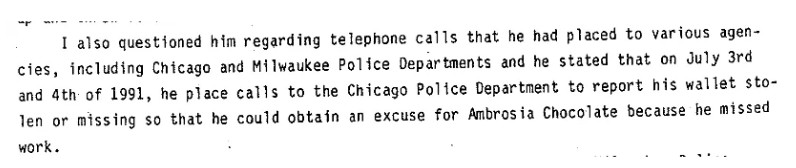
My full analysis of Jeff Dahmer’s confession—including several unusual details that fall outside the scope of this article—is available here: Who Was Eric Lamar Stanley and Why Was His Social Security Number on Jeff Dahmer’s Confession?
A Different Suspect
Some readers may draw a different conclusion.
After all, Jeremiah worked for Steve Toushin during the years leading up to Toushin’s federal obscenity prosecution. He handled orders, mailings, and customer service. Later, in a letter to Toushin, Jeremiah jokingly referred to himself as “Ms. Mistake” and suggested that the government should have been blaming him instead.
Viewed in that light, some readers may wonder whether Jeremiah’s disappearance had less to do with Jeffrey Dahmer than with Steve Toushin. If Jeremiah played a role—whether intentionally or unintentionally—in events that contributed to Toushin’s legal troubles, perhaps Toushin had a motive to silence him. Under that interpretation, the story about Jeffrey Dahmer at Carol’s that night becomes a cover story created afterward to explain Jeremiah’s disappearance.
Yet that theory struggles to explain something…
If Steve Toushin was using Jeffrey Dahmer as a cover story, why doesn’t he claim to remember meeting him? It would have been easy enough to do.
Here’s what Toushin writes (chapter 29) about that Saturday night at Carol’s. He is recalling a conversation with porn filmmaker Robert Prion:
He (Prion) told me I had come into the bar around 11 or 12 that night for a short time and when Jeremy saw me, he came over to tell me about this pleasant man he had just met, and then he introduced Dahmer to me. I have to admit that I do not remember any of this.
If Jeffrey Dahmer was being used by Toushin to explain Jeremiah’s disappearance, one might expect Toushin to emphasize the encounter. One might expect him to say, “Of course, I remember meeting Dahmer.”
Instead, Toushin says the opposite. According to his own account, he does not remember meeting Jeff Dahmer at all.
A Curious Question
One detail from Toushin’s account deserves mention.
According to Teddy Jones, before leaving with the man later identified as Jeffrey Dahmer, Jeremiah asked whether Teddy thought he seemed safe.
Teddy said Jeremy told him the man from Milwaukee had asked him to spend the rest of the weekend with him. Jeremy asked Teddy if he should go with the man. (chapter 29)
The question is curious.
After all, this was not a child leaving with a stranger. Nor was it a woman seeking reassurance about a man she had just met. According to the story, these were two adult men who had spent several hours together in a crowded Chicago gay bar surrounded by friends and acquaintances.
Yet the question serves an important purpose within the narrative. It establishes, in advance, the possibility that Jeremiah sensed some danger, while simultaneously allowing Teddy to reassure him that everything appeared normal.
Whether the exchange occurred exactly as remembered is impossible to know.
What can be said is that it functions almost like a piece of foreshadowing. The future victim expresses a moment of uncertainty. The future witness offers reassurance. The story then proceeds exactly where the reader expects it to go.
More Than One Witness
Another detail often overlooked is that Teddy Jones was not the only person who claimed to have seen Jeremiah with the man later identified as Jeffrey Dahmer.
According to Toushin, at least three people from the Bijou circle encountered Jeff Dahmer at Carol’s Speakeasy that night: Teddy Jones, Richard Voss, and porn filmmaker Robert Prion. Toushin even states that he was told that Jeremiah introduced Jeff Dahmer to them.
That detail matters because it transforms the encounter from a private meeting into a witnessed event. The accepted story does not rest solely on Teddy Jones’s recollection. According to Toushin, multiple people saw Jeremiah in Jeff Dahmer’s company before they supposedly left for Milwaukee.
Whether those recollections were truly independent, and when they were first recorded, are separate questions. What matters for present purposes is simply that Toushin’s account describes more than one witness.
So, if Toushin is correct, three separate people from the Bijou world later remembered seeing Jeremiah with Jeff Dahmer on the night he disappeared.
If the Jeffrey Dahmer story is not what we’ve been told, what exactly were those three men witnessing?
And why was Jeff Dahmer in Carol’s Speakeasy that night?
And why, according to the FBI, did Jeremiah’s father report him missing only hours later?
It is worth remembering that none of this was happening in a vacuum. It was unfolding around Steve Toushin, a man who had spent years under federal scrutiny and who was already a target of the Meese Commission’s anti-pornography crusade.
If Jeff Dahmer Didn't Kill Jeremiah, Then What?
For more than thirty years, the Jeffrey Dahmer story has provided an answer to the Jeremiah Weinberger question.
What happened to Jeremiah?
Jeffrey Dahmer killed him.
Case closed.
Once that answer is accepted, everything that came before it becomes little more than background noise. Jeremiah’s employment at Bijou Video. His role in the company’s day-to-day operations. His letter to Steve Toushin. None of it seems particularly important. He becomes a victim, and victims rarely receive much attention beyond the circumstances of their deaths.
But what happens if we remove Jeff Dahmer from the equation?
What happens if the serial killer story itself was fabricated, as I argue on this website?
Suddenly, Jeremiah Weinberger becomes interesting again. The details that once appeared irrelevant move back to the center of the story.
Why was he so determined to work at Bijou Video that he repeatedly returned after being turned away?
What exactly was his role inside the company?
Who was responsible for the shipment that transformed a federal investigation into a prosecutable obscenity case against Steve Toushin?
Why did Jeremiah later write to Toushin in prison about “all the mistakes” he had made at the Bijou, before signing the letter “Ms. Mistake”?
And why do FBI records indicate that Jeremiah’s father reported him missing on July 6, 1991—mere hours after Jeremiah supposedly left Chicago for Milwaukee with the man later identified as Jeffrey Dahmer?
If Jeffrey Dahmer wasn’t a serial killer, then what really happened to Jeremiah Weinberger? What became of him after July 6, 1991? The question becomes even more difficult to ignore when one discovers that Jeremiah is among the fifteen alleged Jeff Dahmer victims who do not appear in the Social Security Death Index.
The Price of a Story
By now, you may have some idea where I am going with this.
Jeremiah Weinberger repeatedly sought employment at a company that was already attracting the attention of federal authorities. He later occupied a position inside that company during the years leading up to Steve Toushin’s obscenity prosecution. He jokingly referred to himself as “Ms. Mistake” in a letter written after Toushin went to prison. Decades later, the story that supposedly explains his disappearance is now coming under scrutiny.
Federal investigations have long relied on confidential informants, cooperating witnesses, and individuals positioned close to the people they wished to investigate. Such people do not always fit the public’s image of an informant. Some cooperate willingly. Others do not. Some understand their role. Others may only partially understand it.
I cannot prove that Jeremiah Weinberger occupied such a position. Nor can I prove that Jeff Dahmer did.
Yet after examining the chronology, the federal prosecution of Steve Toushin, Jeremiah’s position inside the company, the “Ms. Mistake” letter, the July 6 missing-person report, and the larger questions surrounding the “serial killer” story itself, I find it increasingly difficult to dismiss the possibility that the “serial killer” story was never primarily about Jeff Dahmer, but rather part of a much larger effort to wage war on an entire industry and the culture surrounding it.
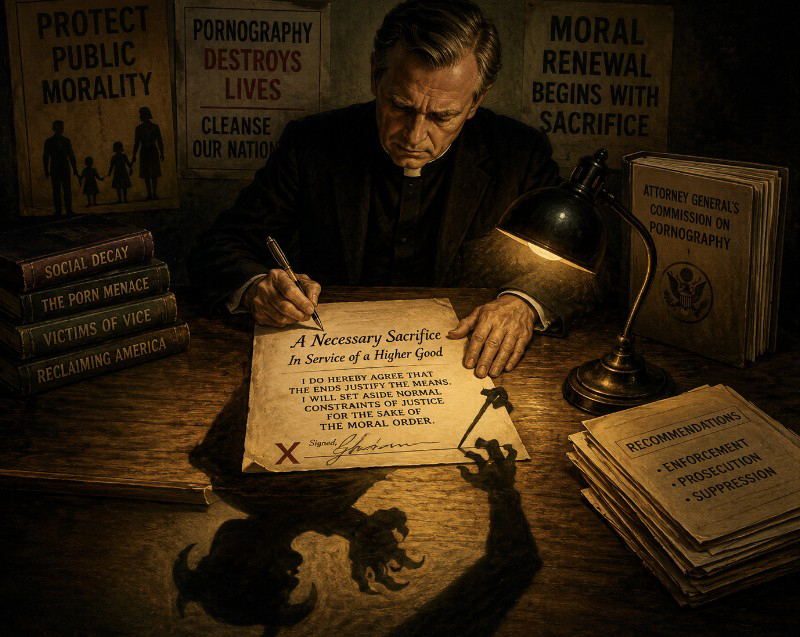
If that possibility is correct, then the moral calculus changes dramatically. It would mean that the people who presented themselves as defenders of public virtue committed an act far more destructive than the vice they claimed to oppose, because Jeff Dahmer’s name and face were transformed into a global symbol of sexual depravity, sadism, murder, and horror—a reputation from which there is no escape
The irony runs even deeper.
If the purpose of the anti-pornography movement was to reduce unhealthy fascination with sex, the result appears strangely paradoxical. One of the most enduring products of that era was a story that encouraged millions of people to consume, discuss, romanticize, and commercialize one of the most extreme sexual narratives ever presented to the public.
If Jeffrey Dahmer is still alive somewhere, then the irony becomes even more profound. This sexualization is happening without his consent. In a story supposedly warning about domination and control, Jeff himself may have become the ultimate example of domination without consent.
This is also why I have increasingly come to view the story through the lens of human trafficking. When most people hear that term, they imagine physical captivity, transportation, or forced labor. But at its core, trafficking involves the use of a human being as a means to someone else’s end. If a person’s identity, reputation, image, sexuality, and life story were appropriated and repurposed in service of a larger agenda, then the moral question remains the same: Was a human being treated as a person—or as a tool?
That, more than anything else, is the question that has stayed with me throughout this investigation.
The Morality Tale Hypothesis
Readers interested in the broader institutional connections surrounding the Jeffrey Dahmer story may wish to review my investigation into the Archdiocese of Milwaukee. As I document there, a surprising number of the case’s key participants had direct or indirect ties to the Archdiocese.
When I first noticed those connections, I assumed they were relevant for one reason: the Catholic Church was struggling with growing sexual abuse scandals, and the Jeffrey Dahmer “serial killer” story may have served as a powerful contrast. Compared to a man accused of murder, cannibalism, and necrophilia, abusive clergy would appear less shocking.
Today, I am less certain that this was the whole story.
The anti-pornography movement was not merely a legal campaign. It was a moral crusade. And at the center of that crusade stood people who, because of their religious conviction, believed pornography was helping to corrupt American society.
Which brings us back to Steve Toushin.
Toushin was not simply a pornographer. He was involved in gay, BDSM-themed pornography—the very kind of material that many anti-pornography activists considered especially dangerous. The Jeffrey Dahmer story, meanwhile, contains themes that seem almost designed to reinforce those fears about gay BDSM porn: domination, control, sexual obsession, the desire to prevent partners from leaving, and the creation of a permanently compliant “sex slave.”
In other words, the fabricated “serial killer” narrative associates unconventional sexual interests – primarily homosexual – with increasingly extreme behavior, culminating in torture, murder, and horror.
Viewed in that context, the story begins to look like more than just a serial-killer narrative. It begins to resemble a parable about the dangers of sexual transgression. The implied message is difficult to miss: experiment with pornography, BDSM, sexual deviance, and forbidden desires, and this is where it leads.
And if that possibility sounds far-fetched, it is worth remembering that the central figures in the Jeffrey Dahmer story did not emerge from unrelated worlds. As I document elsewhere on this website, prosecutors, defense attorneys, and other influential participants had direct or indirect ties to the Archdiocese of Milwaukee. Readers can review that investigation and decide for themselves what significance, if any, those connections may have.
A Personal Note
I should probably end with a confession of my own.
Nothing in this article should be read as an endorsement of Steve Toushin’s business or the material he sold. Like many readers, I find it deeply unappealing.
But I find something else even more troubling.
If the Jeffrey Dahmer story was fabricated, then the implications are difficult to ignore. It would mean that those responsible were willing to deceive hundreds of millions of people in pursuit of what they believed was a righteous cause. It would mean constructing a false narrative, destroying a man’s reputation, and perhaps much more, all in the name of morality.
That offends me far more than pornography.
The result has been unexpected. The more I have studied this story, the less interested I have become in the sins of people like Steve Toushin, and the more I have come to question the assumption that those who speak most loudly about morality are moral themselves.
I have little doubt that many of them believed they were serving a righteous cause. The question is whether a righteous cause can justify dishonest means.
And if it cannot, then perhaps history owes a second look not only to Jeff Dahmer, but also to the people who spent years in the crosshairs of the anti-pornography crusade.
Some of them may have been far more wronged than the public was ever led to believe.
Pulling Back the Curtain
I am not an investigative journalist. My professional background is in marketing and competitive intelligence.
I simply ran a few checks and found that the records didn’t match the official “serial killer” narrative at all.
Everything on this website grew out of that experience.
Steven Toushin writes in his book about confronting what he calls the “omnipotent Oz”—his term for a government bureaucracy that often appears too large and too powerful for ordinary people to challenge.
My own experience has convinced me that this is not entirely true.
You do not need a badge, a law degree, a journalism degree, or access to classified information to uncover a lie.
What you need is motivation.
Motivated people move mountains. They teach themselves unfamiliar subjects. They spend nights comparing records that everyone else assumes have already been checked. They keep asking questions long after others have lost interest.
As I said, I’m not an investigative journalist. I was simply motivated enough to follow the evidence wherever it led.
If you would like to understand how I first came to question the Jeffrey Dahmer story, you can read that account here: How I Found The Truth About Jeff Dahmer.
Read More
Readers interested in learning more about Steve Toushin and the history of the Bijou Theater may wish to read “Be You At The Bijou,” a recent profile published in the Chicago Reader.
This 30-minute interview from 2015 provides additional context about Steve Toushin, the federal obscenity prosecutions, and his views on the anti-pornography campaign.
For additional archival material, interviews, and commentary, readers can also visit this YouTube channel.