Rev. Gregory O’Meara, S.J., and the One Rule He Didn’t Follow
What Gregory O’Meara Gets Right
In a recorded interview on the death penalty, Rev. Gregory O’Meara, S.J., lays out a moral rule with unusual clarity…one I agree with. The death penalty cannot be morally justified in a system that is demonstrably fallible, structurally imperfect, and incapable of guaranteeing fairness. On that point, O’Meara is right. To execute someone, he argues, the state must first do something morally corrupting:
“we have to focus on and define a human being solely and only in terms of the worst thing they’ve ever done in their lives and say that’s what this human being is made of. That’s all this human being is.”
That act of reduction, he explains, is the real danger…not only because people make mistakes, but because execution renders those mistakes permanent. “People are fallible. People are fragile. People are broken,” O’Meara observes, which is why “you don’t want to balance that with a human life in the balance.”
O’Meara is speaking explicitly about physical execution. But the moral rule he articulates is not about needles, gallows, or chemicals. The problem, as he frames it, is that execution is an irreversible judgment imposed by fallible individuals.

The Contradiction
In the same interview, Gregory O’Meara invokes Jeff Dahmer by name. He presents Jeff as an example of why even the most “notorious criminal” must not be executed. To do so, he argues, would require reducing a human being to the worst thing attributed to them and fixing that reduction permanently.
Yet O’Meara participated in producing and reinforcing the public narrative about Jeff Dahmer…a narrative that was fabricated, as documented extensively on this site, and that achieved exactly the form of permanent reduction he condemns.
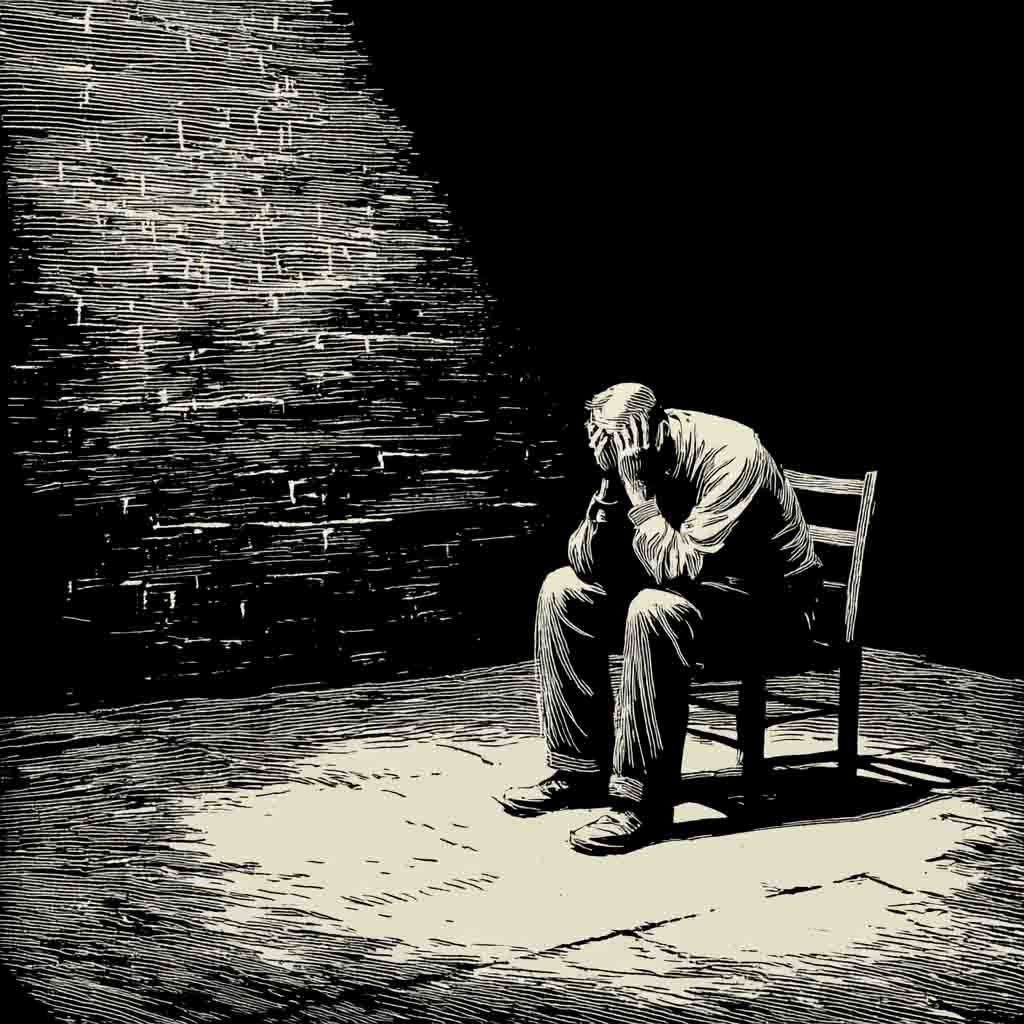
That fabricated narrative about Jeff Dahmer has resulted in permanent public fixation on a fictional “serial killer” identity…no exit, no correction, and no possibility of re-humanization. By O’Meara’s own stated logic, what was done to Jeff Dahmer was not merely punishment. It was a form of execution…virtual rather than biological.
If you want to examine the Dahmer case directly, start with the records:
→ Was Konerak Sinthasomphone Even Real?
→ Richard Guerrero Died in 1960
→ Who Was “Eddie Smith” in the Dahmer Case?
→ Is This Man Curtis Straughter?
How the Jeff Dahmer “Serial Killer” Narrative Became Permanent
The “serial killer” narrative about Jeff Dahmer rests on a set of claims that do not hold up under scrutiny. The documentation establishing this is published elsewhere on this site and is not re-argued here. What matters for present purposes is how a fabricated story becomes an official one, and how it stays that way.
Rev. Gregory O’Meara, S.J., was part of the prosecution in the Dahmer case. That role placed him inside the process that produces records the rest of the system treats as authoritative.
This is how narratives acquire weight and permanence. Prosecutors speak for the state. Court proceedings generate transcripts and filings. Those materials become primary sources. From there, the process is routine. Journalists cite the record. Academics reference it. Documentaries summarize it. Each repetition points back to the existence of the record itself rather than to a fresh examination of the facts.
Participation in the process produces outcomes. One of those outcomes was a fabricated public narrative about Jeff Dahmer that took hold early and remained in force.
The Rule and the Result
As noted above, in his public remarks on the death penalty, Rev. Gregory O’Meara, S.J., lays down a clear rule. The state must never reduce a human being to the worst thing attributed to them. It must never close off the possibility of correction and call the result justice.
In the case of Jeff Dahmer, a fictional identity was created and made permanent. That narrative reduced Jeff Dahmer to “serial killer”, excluded revision, and has remained in force for decades. O’Meara participated in the prosecution that generated and legitimized that record.
What O’Meara says must never be done is exactly what was done to Jeff Dahmer.
Execution by Other Means
What matters in Gregory O’Meara’s framework is not the mechanism of punishment but its effect. An act becomes morally disqualifying when it is treated as final and irreversible, with no meaningful avenue for correction. That is the condition he objects to. Whether the punishment is carried out with a syringe or with a fabricated narrative does not change that condition.
Narrative permanence functions as an irreversible punishment in practice. Once a fictional identity is created through official process, entered into official records, and then carried forward by major media outlets, academic institutions, and reference systems that defer to those records, there is no mechanism for revision.
New information does not reopen the case because the narrative is not governed by evidence. It is governed by authority. The story remains operative regardless of contrary material because the institutions with the power to define, repeat, and legitimize the fabricated narrative continue to do so. In that sense, permanence is doing the same work here that execution does in the physical world. A person is reduced to a single defining story. That story is treated as complete. Correction is excluded.
It was, in that sense, a virtual execution.
What Remains
In his public remarks, Gregory O’Meara, S.J., says the state must not permanently fix a human being’s identity. It must not reduce a person to the worst thing attributed to them and treat that reduction as final. It must preserve the possibility of correction.
In the case of Jeff Dahmer, the opposite occurred. A fictional identity was constructed through official process, entered into the record, and repeated until it hardened into public fact. Gregory O’Meara participated in the process that produced and legitimized it. That identity has remained unchanged for decades, with no mechanism for correction.
What that leaves is Jeff Dahmer trapped inside a fabricated narrative he did not create and cannot escape, held indefinitely by the same institutions that insist – elsewhere – that this must never be done.