Roy Ratcliff and the Real Jeff Dahmer
Did Roy Ratcliff Believe the Official Story About Jeff Dahmer?
The first question I had about Roy Ratcliff was an obvious one. If the story about Jeff Dahmer was fabricated, what did Ratcliff know?
According to Dark Journey, Deep Grace, Ratcliff visited Jeff repeatedly at Columbia Correctional Institution, baptized him, studied the Bible with him, and remained in contact with him until Jeff’s alleged death in 1994. Because Ratcliff knew Jeff personally, I initially wondered whether he had been let in on the truth behind the public story.
After rereading his book, however, I came away with the opposite impression.
One of the clearest examples involves pornography. Ratcliff recounts a visit in which Jeff complained about unsolicited pornographic material arriving through the mail. Ratcliff asked what kind of pictures he was receiving.
Jeff told him they showed “naked women in lewd positions or girls in provocative poses.”
Ratcliff was startled.
“This surprised me. I knew of Jeff’s homosexuality. Why did prurient pictures of women – not of men, bother him?”
The moment is revealing. Ratcliff has encountered something that doesn’t fit what he believes about Jeff, and he knows it. But instead of questioning the premise, he tries to explain the contradiction away. Perhaps, he reasons, it didn’t matter whether the pictures showed men or women. What troubled Jeff was simply that they were lewd.
Had Ratcliff known that the ‘’serial killer’’ story was fabricated, his confusion would be difficult to explain. He could also have omitted the detail entirely. The gender of the people in the pornography was unnecessary to the story, as was Ratcliff’s own puzzled reaction.
Yet he included both.
What emerges from the exchange isn’t the impression of a man helping to maintain a cover story. It’s the impression of someone who believed the official account, noticed an inconsistency, and then found a way to make it fit.
In other words, this passage suggests Ratcliff sincerely believed the fabricated story about Jeff. Therefore, that suggests he wasn’t in on it. Ratcliff genuinely believed he was ministering to a serial killer.
So, Was Jeff Dahmer Actually in Prison?
I’ve never assumed that because the story about Jeff was fabricated, his imprisonment must also have been fabricated. I’ve long suspected that he spent at least some period of time inside Columbia Correctional Institution, and that the story of his murder there may later have provided the means to make him disappear from public view. In other words, that’s how they got him out of prison. It was a cover story.
Ratcliff’s book strengthens the first part of that suspicion.
What interests me is not simply that his account contains mundane prison details. Fiction can contain mundane details too. It’s that so many of Ratcliff’s details are unnecessary to the story he supposedly would have been trying to sell.
If Ratcliff had knowingly been helping construct a fictional account of Jeff finding God in prison, the basic narrative required very little. He visited Jeff. Jeff wanted to be baptized. Ratcliff baptized him. They had some Bible study sessions. That would have been enough.
Instead, Ratcliff describes a succession of practical problems that lead nowhere.
At one point, he follows Jeff out of a visiting area and is stopped by a guard because he isn’t allowed to walk through the prison unescorted. Elsewhere, he waits for chaplains and guards and has to work around rules that complicate even simple arrangements.
The baptism becomes a bureaucratic problem of its own. Ratcliff is told that if the prison buys a baptistery for Christian inmates, it may have to provide comparable facilities for other religions. So he begins calling religious-supply companies, looking for something that might be donated. Someone suggests a watering tank. Another offers a communion table that converts into a baptistery. Ratcliff takes that idea back to the prison, only to learn that they already have a communion table and don’t need another one.
Later, he describes being escorted with Jeff to the medical area and whirlpool. Jeff talks about what he can and cannot obtain in his cell. The prison keeps intruding into the story through restrictions, escorts, waiting, and small logistical problems.
Why invent all of that?
The details are also unusually specific. A person knowingly inventing a prison-conversion story would be creating additional facts that might later have to be explained or kept consistent. Ratcliff often seems simply to be remembering whatever irritated, surprised, or inconvenienced him along the way.
That doesn’t mean every conversation in his memoir should be treated as a verbatim transcript, or that every detail happened exactly as he remembered it. But taken together, these episodes make more sense to me if Ratcliff really was trying to minister to Jeff inside an actual prison than if he knowingly invented the entire setting.
For me, that makes it plausible that Jeff really did spend time at Columbia Correctional Institution. In other words, the incarceration itself may have been real, even if the story surrounding the prisoner was not.
Was Jeff Dahmer’s Conversion to Christianity Genuine?
Ratcliff’s account raises another question: was Jeff’s conversion to Christianity actually real? What makes me take that possibility seriously isn’t simply that Jeff said he believed in Jesus Christ. It’s the collection of small theological worries that Ratcliff says began to occupy Jeff afterward. They’re so specific, and so lacking in publicity value, that they’re difficult to dismiss as part of a manufactured conversion story.
Here’s what I mean…
Before his baptism, Jeff wanted to know exactly what Ratcliff intended to say. He had been reading religious material sent to him in prison and had become concerned that the wrong words might invalidate the baptism. Ratcliff reassured him, but Jeff wanted to be certain it would be done correctly.
The same anxiety surfaced over Communion. Jeff couldn’t obtain fresh grape juice, bottled grape juice, wine, or frozen concentrate. What he could get was powdered grape drink, which he mixed with water in his cell. But he had read that this might not be acceptable. Ratcliff says the question genuinely troubled Jeff.
Then there was the Bible itself. Ratcliff told Jeff that he normally used the New International Version (NIV). Jeff objected, likely because some of the religious literature he had received insisted that the King James Version was the only trustworthy English Bible.
That may sound like an absurdly obscure concern to readers unfamiliar with conservative Protestant Christianity, but it’s a real one. The belief that the King James Version is the only trustworthy English Bible is very real in some Protestant circles and is often accompanied by deep suspicion of modern translations. Jeff had apparently encountered those arguments in the material people were sending him and taken them seriously enough to challenge Ratcliff about them.
The dispute is almost too peculiar to be useful in a fabricated prison-conversion story. Why invent an argument over Bible translations and Greek manuscripts? It does nothing to make the conversion more dramatic, and Jeff doesn’t conveniently accept whatever his minister tells him. He pushes back.
The same thing happens when Ratcliff suggests that Jeff attend whatever Christian worship services are available in prison. Jeff worries because some of them use musical instruments. His father had become involved with the Church of Christ, where worship without instrumental accompaniment can be an important doctrinal issue. Again, Jeff has been reading. Again, he’s worried that he might be doing something wrong.
Taken together, these episodes make Jeff sound almost scrupulous in the religious sense. He worries about whether his baptism is valid, whether his Communion drink is permissible, whether he’s reading the right Bible, and whether an organ in a worship service violates Scripture. I wouldn’t try to diagnose Jeff from a memoir, but the pattern is hard to miss. The question underneath all of it seems to be: Am I doing this correctly?
Afraid of Getting It Wrong
What makes it sad is two things at once. Jeff’s circumstances were already terrible, and yet he was using some of his limited emotional energy worrying about whether God would reject his Communion because the grape drink came from powder, whether the wrong baptismal words might invalidate the sacrament, or whether an organ in a worship service might put him on the wrong side of God.
And apparently he really believed these things mattered.
I find that heartbreaking. The idea that someone in his position could honestly believe that God might be displeased over powdered grape drink or a musical instrument says something painful about how easily faith can become another source of fear.
Ratcliff, to his credit, tried to reassure him. Again and again, he pushed Jeff away from the idea that faith is about satisfying religious technicalities.
And this is where the details matter. A manufactured conversion story would have had a much simpler shape: the notorious prisoner repents, accepts Christ, gets baptized, and becomes a changed man. Instead, Ratcliff gives us a convert worrying about powdered grape drink, baptismal wording, Bible translations, and musical instruments.
There is, in fact, a name for this kind of anxiety. Religious scrupulosity can lead people to become intensely worried that they have sinned, performed a ritual incorrectly, chosen the wrong words, or somehow displeased God over matters that others would consider trivial. I am not diagnosing Jeff from Ratcliff’s memoir, but what Ratcliff describes bears a striking resemblance to that pattern.
That makes these details even harder for me to dismiss as invented decoration. If someone were manufacturing a conversion story, it would be an oddly specific choice to give Jeff the very kinds of anxious, technical religious worries that real believers sometimes struggle with.
What Does Jeff Think About the Bible Now?
Ratcliff’s book leaves me with one question that goes beyond whether Jeff’s conversion was genuine. If I ever had the chance to sit across the table from Jeff, it would be one of the first things I would want to ask.
Since the “serial killer” story was fabricated, Jeff witnessed, from the inside, something few people ever experience: the construction of a false history about his own life. I cannot help wondering what that did to the way he thought about the Bible.
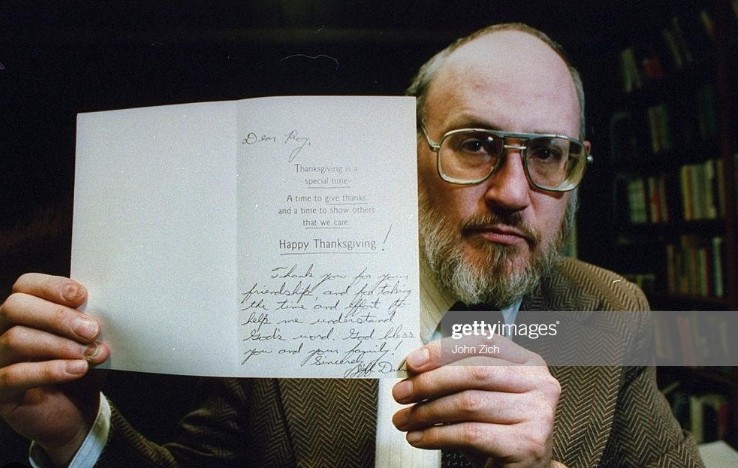
The Jeff Roy Ratcliff describes was deeply concerned with the reliability of texts. He wanted to know which Bible translation he could trust. He worried about the King James Version versus the NIV and about the Greek manuscripts behind them. He had apparently absorbed warnings that translations could become corrupted and carry a reader away from what had originally been written.
He seemed to believe that, if he followed the textual trail carefully enough, he could get back to the truth.
Given what happened to Jeff, I wonder what he thinks about all of that now. I mean, few people could have received a harsher lesson in how a story can become accepted history, right? He had an extraordinary personal demonstration of how an entire documentary tradition can accumulate around a false premise while everyone downstream sincerely believes he is transmitting established fact.
I can’t imagine an experience like that leaving a person’s approach to texts untouched.
After watching a false story about his own life harden into accepted history, I wonder whether Jeff eventually worried less about which Bible translation was on the page and more about the deeper question of how people decide that any story is true at all.
Roy Ratcliff’s Unintended Testimony About Truth
Roy Ratcliff returns often to the subject of truth. At one point, he writes simply:
“The truth is our friend.”
Elsewhere, he expands on the idea:
“Truth leans toward the light, seeking exposure. Some things can be kept a secret for a time, but truth yearns for the light and eventually the truth will be made known.”
Ratcliff was writing about Jeff’s alleged crimes and the importance of bringing hidden things to light. He believed the terrible truth had already been uncovered.
That’s what gives those passages their irony now.
Ratcliff appears to have been sincere. Nothing in his book makes me think he was knowingly helping maintain a false story. He seems to have cared deeply about Jeff, and just as deeply about telling the truth as he understood it.
But sincerity doesn’t guarantee that the story someone has been given is true.
Ratcliff interpreted nearly everything Jeff said through the biography already supplied by police, courts, and the media. When something didn’t quite fit, as in the pornography issue, he tried to make sense of it within that framework. It never occurred to him that the framework itself might be wrong.
And yet his own book may have preserved clues to that possibility. That’s why I find his book valuable. Ratcliff may have been wrong about the most basic premise of the story he was telling, while still being an honest witness to the man he actually knew.
Ratcliff was right that truth eventually comes to light. He was simply looking in the wrong direction. The hidden truth was not that Jeff had committed monstrous crimes. It was that the monstrous story itself was false.
The Friend Who Grieved a Death That Never Happened
If Ratcliff truly believed the story he had been told about Jeff, then he wasn’t merely misled about who his friend was. He was also made to believe that his friend had been violently murdered. Ratcliff grieved a death he believed was real. He carried that loss with him and eventually wrote about it.
Perhaps one day, when the truth about this story is finally known beyond the margins, Ratcliff will discover that the friend he grieved was not lost in the way he was told. And if Jeff is still alive, perhaps they will have the chance to see each other again.
The Man Who Wanted to Disappear
Roy Ratcliff records a revealing comment from Shari Dahmer near the end of his book. She believed Jeff wanted to vanish.
“I think Jeff didn’t want a funeral or a grave marker because he hated his notoriety so much. I think he wanted to disappear and be forgotten and never be heard of or remembered again.”
Ratcliff agreed. He wrote that Jeff was tired of being infamous and tired of being hated.
I’ve thought about that a lot, because in one sense I’m doing exactly what Jeff apparently didn’t want. I keep saying his name. I keep examining the records. I keep asking people to look at him again.
Am I thwarting his wish to disappear?
Perhaps I am. But there is a problem with leaving him alone now. The man might disappear, but “Jeffrey Dahmer” would not. That character would remain everywhere, preserved in films, books, documentaries, photographs, and the public imagination. The real person would be forgotten, while the fictional story told about him would survive.
I can’t bring myself to accept that bargain. It’s intolerable.
If Jeff wanted to disappear because he could no longer bear what his name had become, then I don’t want to preserve that identity. I want to challenge it.
I would rather risk disturbing the silence than let the wrong Jeff survive.