"Dahmer": The Mother Of All Prime-Time Confidence Tricks
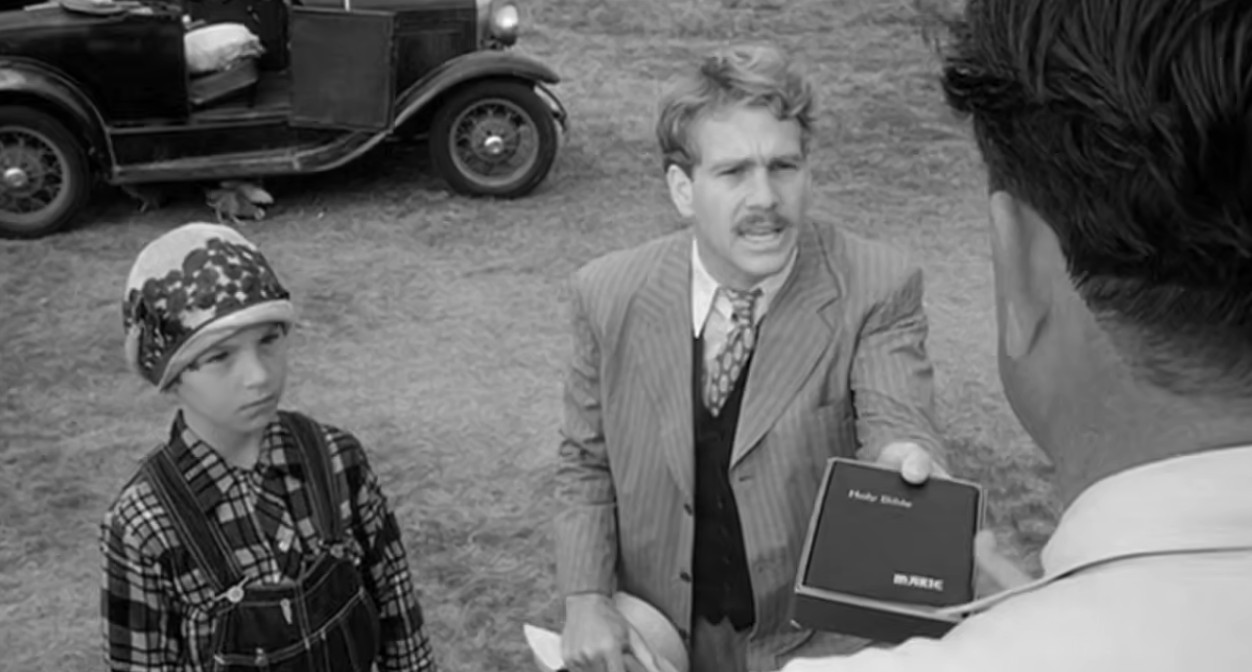
In the 1973 classic film Paper Moon, Moses Pray, played by Ryan O’Neal, drives through Depression-era Kansas with a suitcase full of Bibles and a newspaper list of the recently deceased. When he finds a new widow, he appears at her door and shows her a Bible with her husband’s name stamped in gold on the cover. Moses Pray repeats the routine with other widows in two more clips from the film.
Her husband ordered it shortly before his death, Moses tells her. He is sorry to arrive at such a painful time. There is only a small balance left to pay.
The widow has never met him. She has no particular reason to believe anything he says. But Moses has chosen his disguise carefully. He’s not selling brushes, a cure-all serum, or vacuum cleaners. He’s selling Bibles.
The Bible seems to place him on the side of decency. It suggests faith, marriage, and respect for the dead. For the widow to suspect him, she would have to consider the possibility that a man might use her husband’s name, her grief, and the Bible itself to steal from her. The thought is so ugly that the simpler explanation seems more reasonable. Her husband ordered the Bible. This solemn man has come to deliver it.
That’s how a confidence trick begins. The victim first decides that the person speaking is trustworthy. Once that judgment has been made, the story receives a degree of protection. Doubt begins to feel unreasonable, perhaps even shameful.
Moses Pray is a small-time swindler, working one town at a time. He takes what he can from a widow and drives on. By the time anyone begins to wonder about the Bible salesman, he’s already somewhere else.
There are other confidence men who don’t have to create an appearance of authority for themselves. They begin with it.
They work inside courthouses, police departments, government offices, and news organizations. They carry badges, speak beneath official seals, and appear before cameras with the reputation of an entire institution behind them. The office tells the public who they are before they say anything.
The public accepted the story about Jeff Dahmer because they accepted the authority of the people and institutions presenting it. Their reputations stood behind the allegations in much the same way that the Bible stood behind Moses Pray. They benefited from a belief that was already there: respectable institutions would never lie about something like this.
Why the Public Trusted the Police and Media in the Dahmer Case
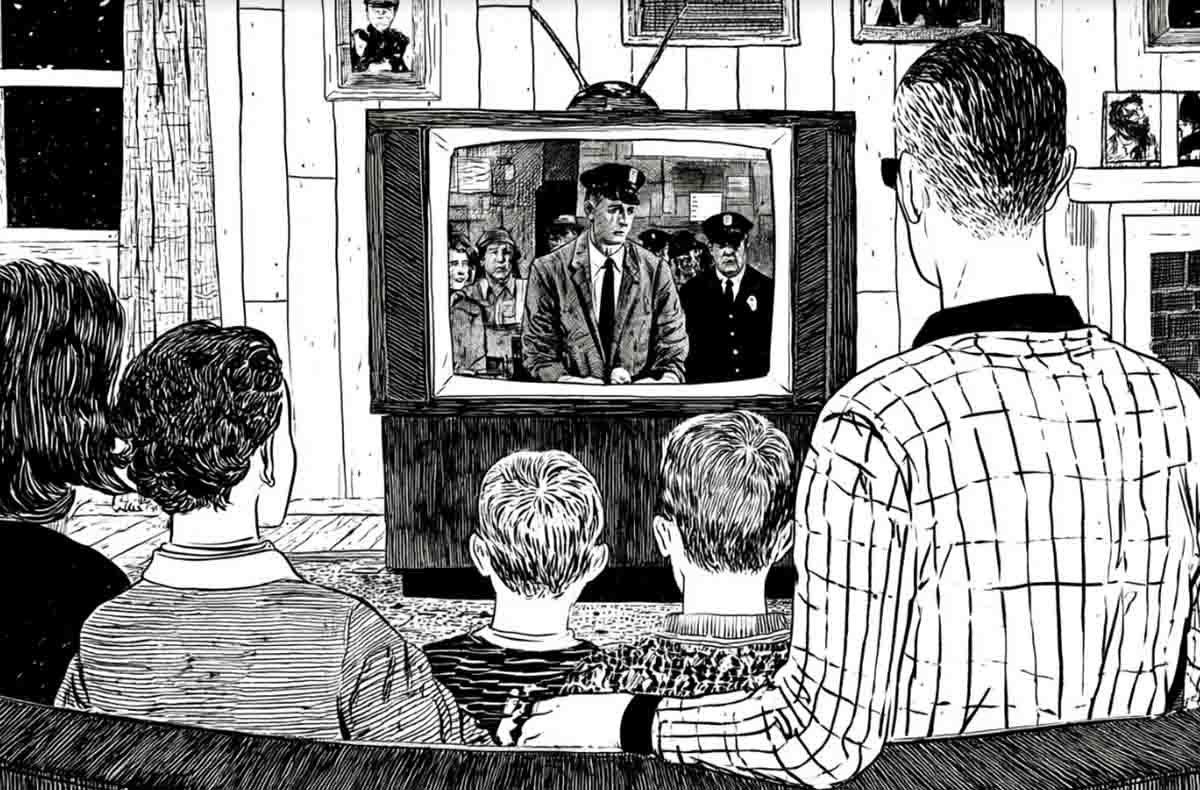
Most people first heard Jeffrey Dahmer’s name from institutions they were accustomed to believing. Police announced that human remains, including a severed head, had been found in Jeff’s apartment. Television footage showed men hauling boxes and a large blue barrel “full of acid” from the building. The story came wrapped in the authority of the police and the press.
No one watching from home had seen for themselves what was inside those boxes or that barrel. They hadn’t seen the apartment or examined any of the evidence. But the police had been inside. They had seen the body parts themselves, right? Why would the police and the media announce something so horrifying unless it was true?
That’s the confidence on which the Jeffrey Dahmer story rested. People didn’t believe the sensational “serial killer” story because they had examined the evidence. They believed it because police officers, prosecutors, courts, and respected news organizations told them it was true.
In Paper Moon, Moses Pray’s confidence scam worked because the widows couldn’t imagine a Bible salesman using their husbands’ deaths to rob them. The Dahmer story rests on a similar assumption. The public could more easily believe in multiple murders, dismemberment, and cannibalism than believe that the police, the courts, and the national media might have sold them a lie.
Why the Jeffrey Dahmer Story Seems Too Big to Be False
A confidence trick on the scale of Moses Pray is easy to understand. One man invents a story, finds someone inclined to trust him, takes the money, and leaves town. The fraud has visible boundaries. We know who is lying, who is being deceived, and what the swindler hopes to gain.
A fabrication built around an alleged multiple-homicide case is harder to picture. It appears to involve police departments, prosecutors, lawyers, courts, official records, newspapers, television networks, and eventually an entire industry of books, films, and documentaries. The Dahmer story has passed through so many hands and acquired the backing of so many respected institutions that the possibility of fraud seems absurd on its face.
If it were false, wouldn’t someone have said so?
That question protects the story. The proposed lie is so large that its size begins to count as evidence against it. People can imagine a dishonest officer altering a report or a newspaper printing something that hasn’t been verified. What they struggle to imagine is a false account moving through several institutions, surviving for decades, and becoming part of American history.
The lie seems too audacious to attempt. Surely, they wouldn’t be able to get away with something this big.
But this objection usually rests on the assumption that everyone connected to the case would have needed to understand the deception. They would not.
Once a story has been declared “true” by people in positions of authority, it can travel through institutions without being reexamined. A clerk records information received from an official source. A reporter quotes the police. An editor trusts the reporter. Later writers rely on the contemporary coverage, and filmmakers rely on the books. Most of these people may sincerely believe what they’re passing along. That’s how a claim can acquire the appearance of independent confirmation even though much of the material leads back to the same small group of sources.
The Dahmer case seems too large to have been a confidence trick because we tend to imagine fraud in personal terms: one swindler, one victim, one overpriced Bible. An institutional confidence trick wouldn’t look like that. Much of it would resemble ordinary work carried out by people following accepted procedures and relying on information they had no reason to question.
When the Victim Becomes a "Willing Participant"
Suppose the official story begins to come apart, is exposed as a fabrication, and the man presented as the perpetrator starts to look like someone who may have been used. After all, who would willingly agree to be remembered as a perverted killer?
The people responsible for such a fraud would have reason to resist that interpretation. A victim of government misconduct invites sympathy and raises questions about who controlled the story, who benefited from it, and what was done to the man at the center of it.
One way to blunt those questions would be to recast Jeff Dahmer as a willing participant. Instead of someone exploited by corrupt agencies, he becomes an operative who understood the plan and accepted his role.
Once Jeff is recast as an operative, ordinary events can be stripped of context and turned into clues. A chance encounter becomes evidence of secret connections, missing records become proof of concealment, and a staged interview becomes something he willingly agreed to perform. Even signs of fear, pressure, or suffering can then be explained away as part of the cover story.
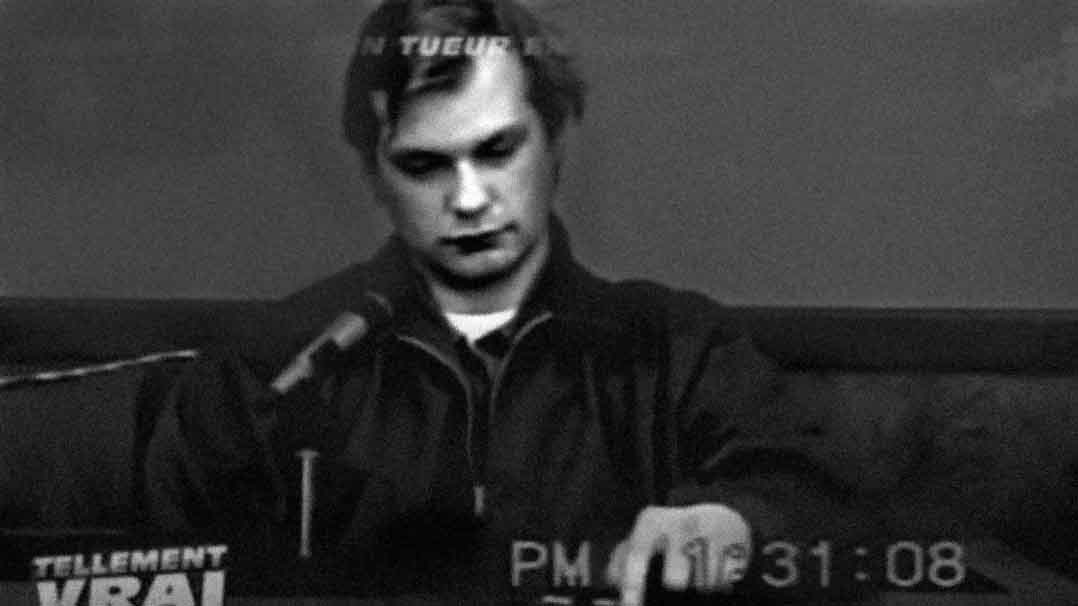
The theory is hard to disprove because every gap can be explained as secrecy and every inconsistency as tradecraft. It’s also more exciting than the possibility that the man presented as the perpetrator was actually being used and abused by corrupt officials. The secret-agent story gives Jeff hidden power and shifts attention away from the people who may have harmed him.
The most effective diversion would not defend the official “serial killer” narrative. It would appear to expose it, then quietly turn the victim into a willing participant and leave the people behind the story safely out of view.
Look Beyond the Prime-Time Story
The official narrative about Jeff Dahmer has been repeated for decades, but repetition is not proof. Visit the Evidence page to examine the court records, government documents, photographs, and contradictions behind the story.
Then look more closely at alleged victim Curtis Straughter, who has a Facebook account and who appears in mugshots taken years after his supposed death, and the strange Steve Toushin connection, in which an alleged victim turns up inside the business of a man pursued by the federal government for years.