The “Dahmer” Hoax Economy
The “Dahmer” hoax didn’t just produce a comic-book villain…it produced decades of content: collectibles, documentaries, book deals, films, prestige TV, and a brand-name bad guy built around a single manufactured “true crime” monster.
What if “true crime” isn’t really about crimes, but about trafficking a fabricated identity through headlines, courtrooms, films, books, merch, and streaming platforms until the story becomes a permanent revenue stream?
The System Needs Monsters. Monsters Need Props.
High-profile “serial killers” always seem to arrive fully accessorized. Along with the headline and the mugshot comes a trail of personal debris sold on murderabelia websites like Cult Collectibles that nobody ever stops to question: letters, drawings, journals, sentimental notes, signed photos, childhood artifacts.
It’s a strange detail when you think about it. These cases are overflowing with keepsakes. Intimate scraps of a life, neatly packaged, sold, and endlessly recycled. Nobody ever asks why so much of this material exists, who has access to it and who’s feeding it to Cult Collectibles.
Here’s an idea…
What if many of these artifacts were created by the “monsters” so they could be used later as merch? They’re salable, collectible, and monetizable. They can be “authenticated”, catalogued, resold, and displayed. Once these artifacts are in circulation, the “monster” becomes a product line.
What if the “crimes” matter only because they justify the merchandise? What if the real engine is the identity production economy…the ongoing manufacture and circulation of physical items and media content that keep the character alive and profitable long after the legal questions have gone stale?

Anatomy of the Dahmer Hoax Economy
Once you stop pretending these stories are organic crime narratives – and we already know the “Dahmer” hoax was manufactured – they stop looking like criminal cases and start looking like a business model.
The state does the first part. It hands over a clean myth: a perfect villain, a sealed case, a moral bow tied tight enough that no one has to ask uncomfortable questions.
The media takes it from there. Newspapers, wire services, local TV, cable news. Press conferences get repeated as facts. Talking points turn into headlines. The story gets amplified, standardized, and frozen in place. The monster becomes familiar.
Then the money really starts flowing.
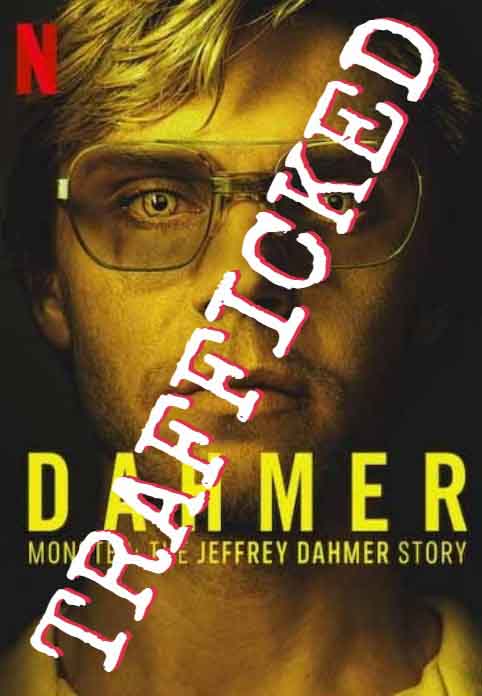
Filmmakers turn the myth into content. Documentary crews milk it for “new revelations” that somehow never require new evidence. Book authors repackage police press releases as true-crime insight. Streaming platforms turn a human being into an IP asset with a logo, a color palette, and a trailer drop.
And down in the aftermarket, sites like Cult Collectibles sell the physical residue of the role itself…letters, drawings, signatures, photos, sentimental scraps marketed as “authentic,” priced like rare vinyl. Much of this material is produced in advance, like inventory.
The person inside the manufactured identity – the “monster”- is prompted (i.e. coerced labor) to generate usable artifacts that can be sold later as demand requires. Those pieces are mixed in with genuinely personal items like childhood photos or old drawings.
This isn’t vague or metaphorical. These are identifiable industries extracting value from a single manufactured identity.
Look at it this way and the whole arrangement lines up neatly with the United Nations’ legal definition of human trafficking: recruitment into a role, control through institutional pressure, and ongoing exploitation for economic and symbolic gain. No dark alleys required. Just courtrooms, studios, streaming platforms, and a shopping cart.
They call it “true crime”. What it actually is…is a content-and-merch pipeline built around a manufactured villain.

Cult Collectibles: The Retail Arm of a Human Trafficking Pipeline
Cult Collectibles doesn’t sell history. It sells upkeep. What moves through its platform isn’t insight into a “monster,” but narrative maintenance…objects whose only job is to keep a manufactured identity alive, recognizable, and profitable.
Which raises the obvious question people keep asking and never get a straight answer to:
Where does this stuff actually come from?
The letters, drawings, signed forms, photos, and sentimental scraps don’t appear out of thin air. They aren’t excavated from crime scenes or discovered by accident decades later. Someone has to possess them. Someone has to produce them. Someone has to feed them into the market.
Here’s the simplest explanation, and the one that fits the incentives best: the person inside the manufactured identity is part of the supply chain. In this case, that would be Jeff Dahmer.
While contained, he produces material that can be sold later. Handwritten notes. Sketches. Signed items. These are mixed with genuinely personal objects from outside the narrative – childhood photos, old drawings, personal belongings like eyeglasses – so the boundary between private life and production disappears. Everything becomes usable.
Those materials are then sold through platforms like Cult Collectibles, “authenticated” through the story itself, and priced accordingly. In exchange, the “monster” likely receives a cut. Not freedom. Not agency. Just compensation tied to continued participation.
This isn’t a fringe idea. This is how every other gray-market labor system works. It’s efficient, controllable, and mutually reinforcing. The platform gets inventory. The narrative stays alive. The person remains economically useful as long as he keeps feeding items that can be sold..
This only works if the person at the center – the “monster” – never fully exits the role. As long as he keeps feeding material into the system, the machine keeps humming. Inventory stays stocked. The myth stays intact.
Maybe “true crime” is just a retail operation built on a fabricated identity, coerced production, partial compensation, and a role you’re never allowed to stop playing.
And systems like this are rarely built for a single performer.
Frequently Asked Questions about “Dahmer”
Is “Dahmer” a hoax?
The evidence suggests that “Dahmer,” as the public understands it, is not a factual criminal case but a constructed narrative. Key records don’t align, foundational documents are missing or irregular, and the story functions primarily as a cultural product rather than a resolved legal matter. What appears to exist is not a transparent account of crimes, but a durable mythology, one that has generated decades of content, commerce, and institutional insulation without ever being meaningfully reexamined.
Who has been supplying Jeff Dahmer’s personal items to Cult Collectibles?
That’s never explained, and it should be. These things don’t wander onto the internet. Someone holds them, and decides when they go up for sale. One explanation fits the incentives: the person behind the manufactured identity may be part of the supply chain himself, producing material in exchange for compensation tied to continued participation. That’s how gray-market identity labor typically works, and it raises uncomfortable questions about what’s really being sold.