Judas with a Sketchbook: How John Backderf Sold Out the Friend He Knew
Some betrayals happen in smoke-filled rooms. Others in secret courtrooms. But the worst kind? They happen in broad daylight. In bookstores, on Netflix, in smug cartoon panels pretending to mourn the lives they help destroy.
John Backderf cashed in on a fairy tale of blood and horror he must have known was a fraud…because it paid better than the truth. He didn’t just lie. He sold out someone he personally knew, a kid he went to school with, a kid he laughed at, a kid not much different from himself. He didn’t just betray Jeff Dahmer. He betrayed the truth he carried in his own memory, and he did it for his career as a cartoonist.
Backderf Knew Jeff Dahmer Wasn’t a Monster...and Sold Him Out Anyway
John Backderf didn’t have to wonder who Jeff Dahmer was. He wasn’t piecing together rumors or chasing old newspaper clippings. He knew. He sat two rows over. He watched Jeff shuffle through the same grey hallways…just another kid trying to survive the slow-motion wreck of his family. Jeff wasn’t dissecting road kill or hiding bodies in the woods. He wasn’t dragging classmates into basements. There were no red flags fluttering in the lunchroom…unless you counted how easy it was to kick a drowning kid in the head on your way up the ladder.
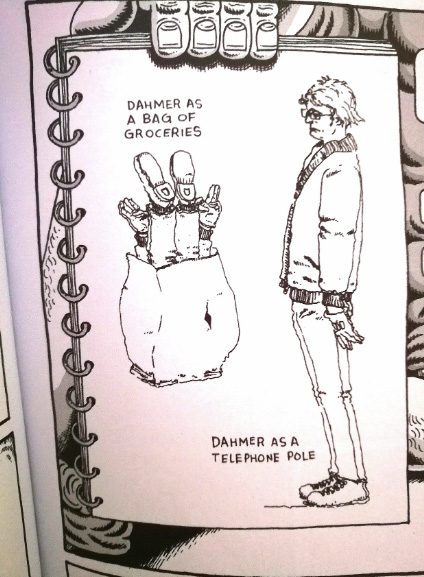
Backderf’s cartoon reduces Jeff to an object—literally a bag of groceries—turning a human being into a sight gag for cheap laughs.
Backderf knew all this. He saw it happen in real time. And when the “Milwaukee Cannibal” narrative exploded with its fake horror movie blue barrel and choreographed media circus [see the documented proof on our Evidence page, John Backderf knew in his gut it didn’t match the kid he grew up with. But truth doesn’t pay. Publishing deals do. So, in 2012, he stapled his memory shut, sharpened his crayons, and got to work.
John Backderf Chose Career Over Truth
When the news hit in 1991, it wasn’t a story. It was a tabloid bloodbath. It didn’t matter that the media launched the story fully built…acid barrels, skull shrines, cannibal sex ghoul headlines screaming off the presses. There was no presumption of innocence. No investigation. No humanity. Jeff Dahmer wasn’t presented as a person. He was rolled out as a monster-of-the-week, shrink-wrapped and ready for prime time. And John Backderf, who knew damn well who Jeff really was, had a choice. He could have stood still. He could have kept his mouth shut. He could have let the deep state circus roll past without joining the parade. Instead, in 2012, he decided to build himself a float. He created the cruelest caricatures of Jeff and stitched them together into a disgusting, lie-filled graphic novel. He wasn’t just riding the monster story…he was helping them build on it.
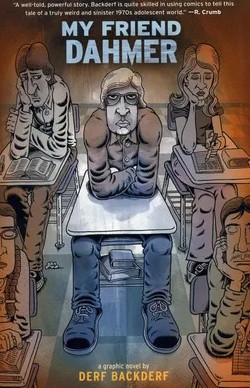
The cover primes readers to see Jeff as an alien presence in a normal world, an outsider marked for ridicule before a single page is read.
Every panel he drew, every fake memory he burnished, every grotesque thing he published…it wasn’t just betrayal anymore. It was collaboration with the deep state machine for money and fame.
John Backderf Went From Classmate to Carnival Barker
Jeff Dahmer the “serial killer” didn’t stumble into the history books. He was built. Sculpted. Weaponized. Right when Milwaukee’s real sex predators needed a fresh body to throw on the fire.
When Jeff’s arrest detonated across the headlines in 1991, the Archdiocese of Milwaukee was teetering on the edge of a cliff …lawsuits stacking up, media sharks circling, and the twink-loving Archbishop Rembert Weakland just a few exposures away from a total public meltdown.
They didn’t need lawyers. They didn’t need damage control. They needed a spectacle…and fast.
Something so grotesque, so brain-melting, that the spotlight would swing away from the Church’s decades of child rape and cover-ups…and lock itself onto something easier, bloodier, dumber.
And right on cue, they got it: a ready-made monster. Acid drums, skull shrines, cannibal sex panic. An innocent young man flipped overnight into the “Milwaukee Cannibal.”
Forget the priests. Forget the lawsuits. Forget the raped kids.
Jeff Dahmer was the only story in town now. And years later, when the smoke started to clear, when there was finally a crack, a moment where someone with guts could have stood up and told the truth…John Backderf showed up with a box of crayons and pissed on Jeff. Backderf didn’t just write a comic book. He picked up a scalpel and helped carve the myth into stone. He knew Jeff wasn’t a monster. He knew Jeff wasn’t some ticking time bomb. He knew exactly who Jeff Dahmer had been…a teenager trying to survive a house falling apart around him. But truth doesn’t sell books. Myth does.
So Backderf sharpened his pen, gutted the real Jeff Dahmer, and stitched together a circus freak, a glossy, grotesque, acid-barrel sideshow for a public too bloodthirsty and too stupid to want anything else. Whether he realized it or not…he wasn’t just riding the monster story anymore. He was building on it. He became another carnival barker for the cover-up. The real predators, the ones in collars and ecclesiastical robes…got to breathe a little easier that day.
Archbishop Rembert Weakland
And somewhere out there…not on Netflix, not in a comic book, but in the real world, Jeff Dahmer has been watching it all. Watching John Backderf sketch him into a freak. Watching old fake memories get transformed into new royalty checks. Watching a former classmate step right over his grave and smile for the cameras.
John Backderf’s Final Betrayal: Twisting His Friend Into a Public Freakshow
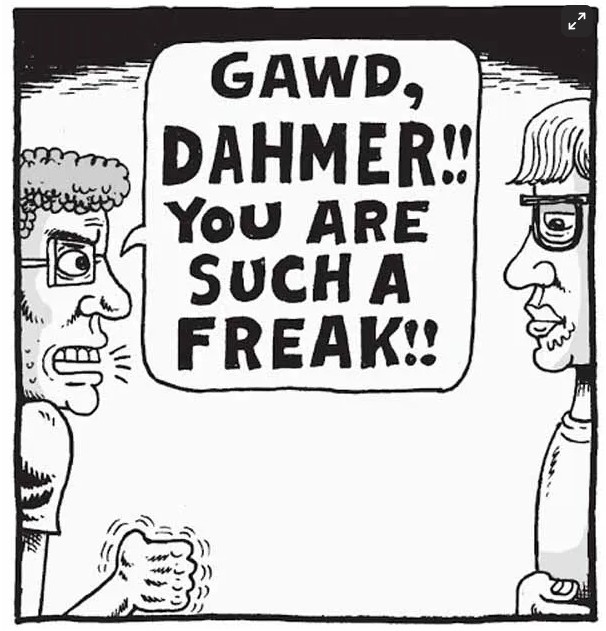
John Backderf didn’t just sell out a kid he once knew. He turned him into a cartoon corpse for the world to laugh at. In My Friend Dahmer, Backderf pretends to offer some kind of sad, mournful reflection…a look back at “a tragedy someone could have stopped”. But that’s not what he drew. He drew a cruel circus.
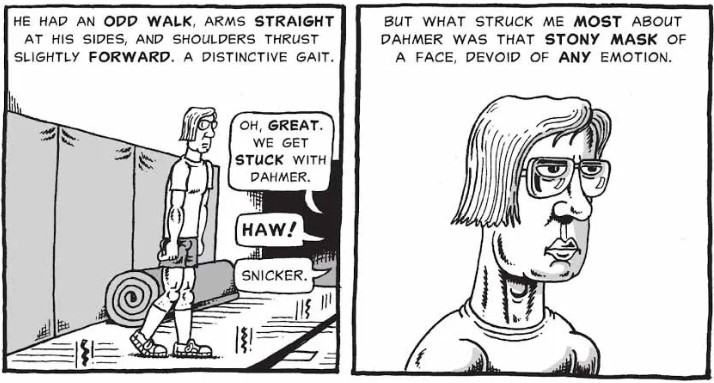
These panels frame Jeff’s physicality and facial expression as unnatural, inviting the audience to view him as a lifeless specimen rather than a person.
Page after page, panel after panel: Jeff lurching, grimacing, fake-seizing down high school hallways while the crowd howls with laughter…as if he had been nothing but a walking freakshow from the beginning. But the real Jeff wasn’t a monster. He wasn’t some doomed outcast marked for destruction. He was a teenager, navigating divorce, loneliness, and the normal confusion of growing up…sometimes weird, sometimes funny, sometimes just a kid trying to get through the day.
A teenage Jeff Dahmer pulls a goofy face for the camera...worlds away from the cold, emotionless image later sold to the public.
Backderf knew this. And he still twisted the truth. He could have told a simple story:
“Jeff was a kid. I knew him. He struggled sometimes. But he wasn’t what they are claiming about him.”
Instead, he stacked the wood for the bonfire. He drew the rope for the lynching. He signed the execution order in pen and ink. All of it wrapped up neatly in a “graphic novel”…and all of it pointing a laughing finger at a kid Backderf knew wasn’t a monster.
A Judas with a Sketchbook
John Backderf isn’t an innocent bystander. He isn’t a confused witness to a tragedy he couldn’t understand. He knows who Jeff Dahmer really was…and when it counted, he chose betrayal. He didn’t just fail to defend the truth. He didn’t just stay silent while the media crucified a kid he once sat next to in class. He picked up a pen and helped drive the nails in. He sold out for career, for smug book tours, for a few thin slices of cartoon immortality. He sold out for ink money.
And whether he meant to or not, John Backderf became exactly what the system needed him to be: A Judas with a sketchbook. A smiling executioner, sharpening his crayons while the real sex predators in robes and collars slipped quietly out the side door.
Backderf’s cartoons are just the sideshow barker’s patter…loud, crude, and designed to keep your eyes off the main act. The real crime scene isn’t in his panels, it’s in the paper trail they never wanted you to see. Go to the Evidence page and watch the official story spring leaks like a busted oil drum. Backderf helped sell the freakshow…but the con was always bigger than him.
faq
Was John Backderf’s "My Friend Dahmer" based on truth?
No. Backderf knew Jeff Dahmer personally, but his comic twisted memories into grotesque caricatures. Instead of truth, My Friend Dahmer sold a fabricated image that fueled the Dahmer hoax.
How did "My Friend Dahmer" help build the Dahmer hoax?
By portraying Jeff Dahmer as a freak from the start, Backderf’s comic gave cultural weight to the fabricated “serial killer” story. It acted as propaganda, legitimizing the fake trial narrative for a global audience.