Vernell Bass: The Man Who Lived Across the Hall From Jeffrey Dahmer
Vernell Bass didn’t encounter Jeff Dahmer through a newspaper headline or a police photograph. He knew him as the man who lived directly across the hall at the Oxford Apartments in Milwaukee, Wisconsin.
According to Bass, the two men spoke regularly. Bass stopped by Jeff’s apartment, sometimes went inside, and seemed to have regarded him as a friend. Jeff didn’t treat the apartment as a place Bass was forbidden to enter. When Bass knocked, Jeff opened the door.
That ordinary relationship became important only later.
After Jeff’s arrest in July 1991, the apartment across the hall was transformed in the public imagination. It became a crime scene allegedly filled with human remains, photographs, chemicals, a freezer, and a large blue barrel full of acid. Newspapers and television repeated the details until the apartment itself became part of the story.
Bass had known the apartment before that happened.
He had stood inside it when there were no television cameras outside. He had seen the furniture and the walls. He remembered a blue barrel that appeared only shortly before the arrest. And he remembered what Jeff did when a bad smell in the building became a problem.
That last detail involved open doors, open windows and a borrowed fan.
We’ll come back to it.
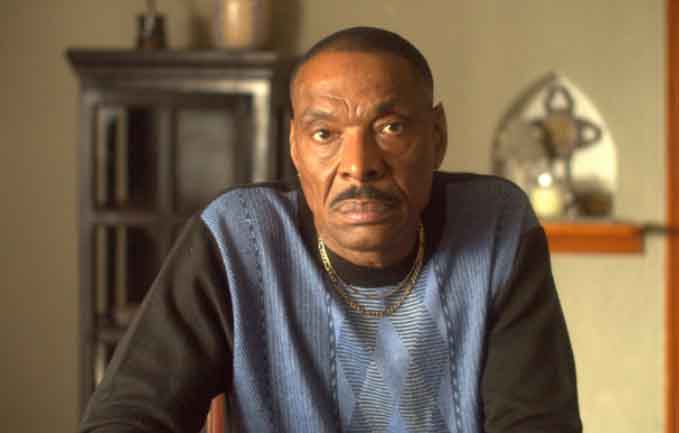
Years later, Bass wrote about these experiences in his self-published book Across the Hall and repeated some of them in interviews. His memories deserve the same caution we’d give anyone recalling ordinary events decades later. Memory changes. Details blur. What a person later learns can become tangled with what he originally saw.
But some of Bass’s memories are striking precisely because they don’t sound like revelations. They’re small, peculiar things that probably meant very little when he first noticed them.
Only later did Bass learn what was supposedly happening in Jeff Dahmer’s apartment.
And once his memories are placed beside that story, some of those ordinary details become much harder to explain.
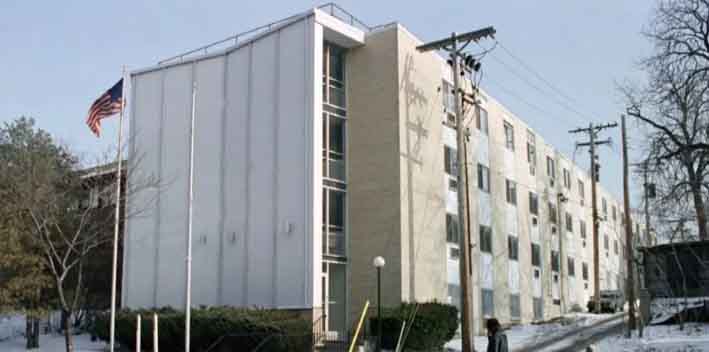
Vernell Bass: A Witness, With Limitations
Before relying too heavily on Vernell Bass, it’s worth asking what kind of witness he is.
He wrote Across the Hall roughly twenty years after the events he describes. That means his memories can’t simply be treated as a transcript of 1991. Over two decades, a person hears news reports, watches documentaries, reads articles, talks to other people, and gradually absorbs the public version of events. Memory doesn’t remain sealed off from all of that.
There’s also a curious change in the book itself. In the earlier chapters, Bass generally refers to his neighbor as “Jeff.” Later, he begins calling him “Dahmer,” and the narrative increasingly incorporates the familiar account of the case. The shift is noticeable enough to suggest that another writer or editor became involved as the book progressed, though the book itself doesn’t establish that.
So the question isn’t whether Vernell Bass remembered everything perfectly. It’s which of his memories are most likely to come from his own experience rather than from the story he heard repeated for years afterward.
For that reason, the most revealing parts of Bass’s account may be the things he says he personally saw and heard that simply don’t make sense if the official story is true.
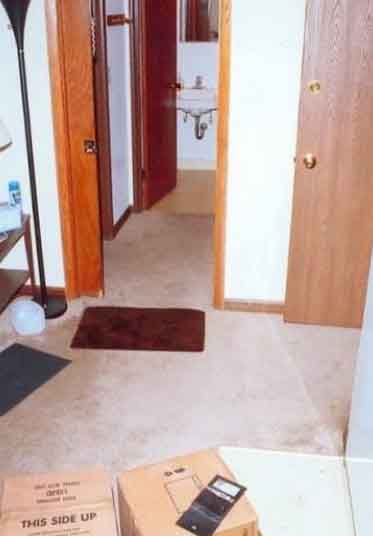
The Apartment Jeff Dahmer Wasn't Hiding
One of the strangest things in Vernell Bass’s account is how little effort Jeff Dahmer seemed to make to keep Bass away from his apartment.
Bass says he went inside more than once, and Jeff never seemed nervous. When Bass knocked, Jeff opened the door and let him in.
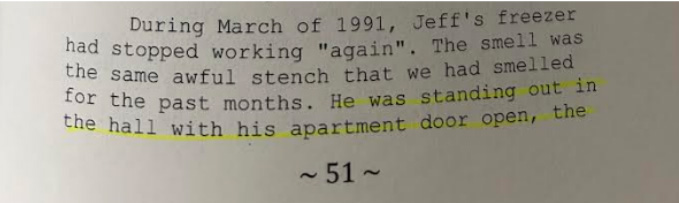
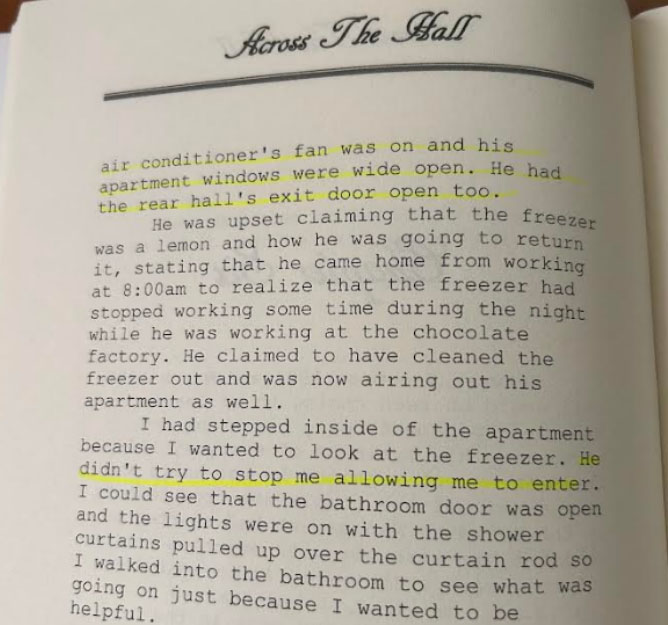
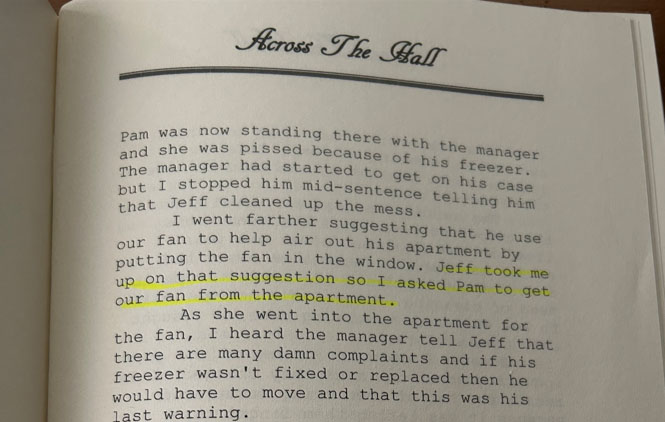
Then there’s the scene Bass describes on page 51 of Across the Hall. A bad smell had become a problem, and Jeff was trying to air out the apartment:
“He was standing out in the hall with his apartment door open, the air conditioner’s fan was on and his apartment windows were wide open. He had the rear hall’s exit door open too.”
Jeff also borrowed a fan from Bass and returned it the next day.
That’s difficult to reconcile with the man described in the confession. There, Jeff Dahmer is portrayed as being careful to keep people from entering the apartment and discovering evidence of what he was doing:
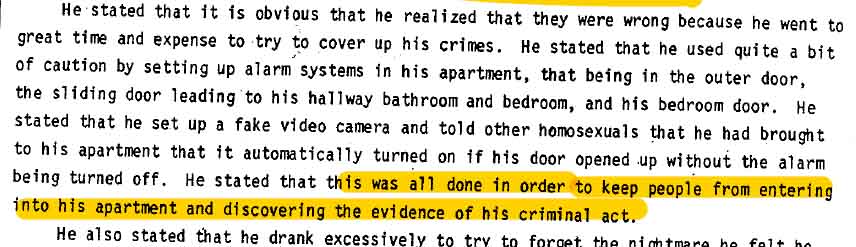
But, as you can see, Vernell Bass describes something very different.
If the smell was really coming from decomposing human remains, why would Jeff open his apartment to the hallway and try to push that smell out into the building’s common area? He would have known that opening doors and windows wouldn’t make the source of the odor disappear. And it risked drawing attention to the very apartment he was supposedly trying to keep hidden.
The same problem appears in Bass’s visits. Why was Jeff apparently comfortable allowing the neighbor across the hall to walk inside an apartment that, according to the official story, contained evidence of multiple murders?
Those two versions of Jeff Dahmer are hard to fit together.
Some readers on Reddit have concluded that Vernell Bass must have been lying because parts of his account conflict with the official narrative. But that reasoning begins by assuming the official narrative is true, then uses that assumption to disqualify the witness who contradicts it. Bass could certainly have remembered some things incorrectly. Deliberately inventing mundane details that contradict the official narrative is a different matter.
The Blue Barrel
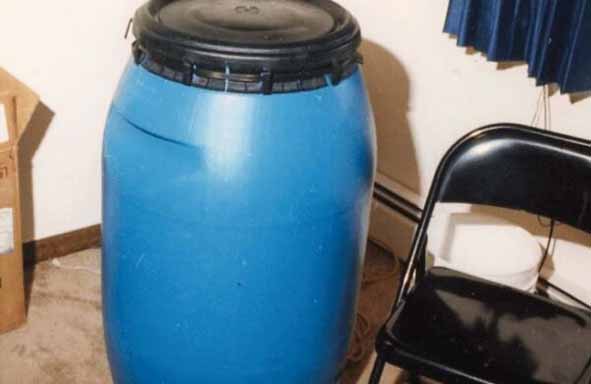
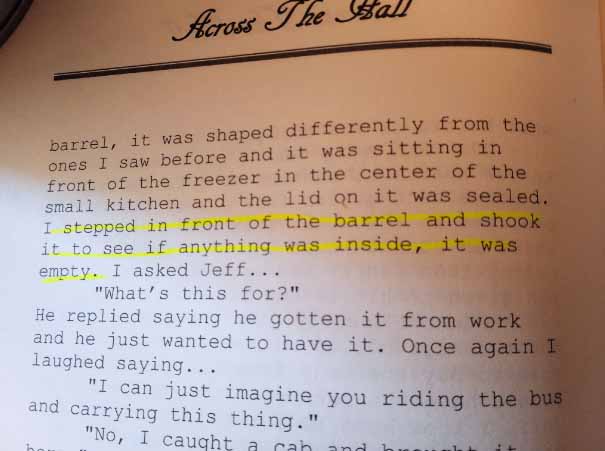
Of all the things Vernell Bass remembered seeing inside Jeff’s apartment, the blue barrel may be the most important.
Bass said it hadn’t been there for long. He recalled that it was in the kitchen and appeared only shortly before Jeff’s arrest. At some point, Bass went over to it and shook it. He didn’t describe it as heavy or filled with liquid. His impression was straightforward.
The barrel was empty.
That detail becomes much harder to dismiss once you place the dates beside it.
A Barrel That Arrived Too Late
Before getting into the problem with the blue barrel, it’s worth clarifying what is meant by Jeff’s “confession.” No recording captures these alleged statements, and no verbatim transcript lets us read the detectives’ questions and Jeff’s answers. Jeff Dahmer’s “confession” also contains another man’s Social Security Number.
What survives are police reports…officers’ written accounts of what they say Jeff Dahmer told them.
That distinction will become important.
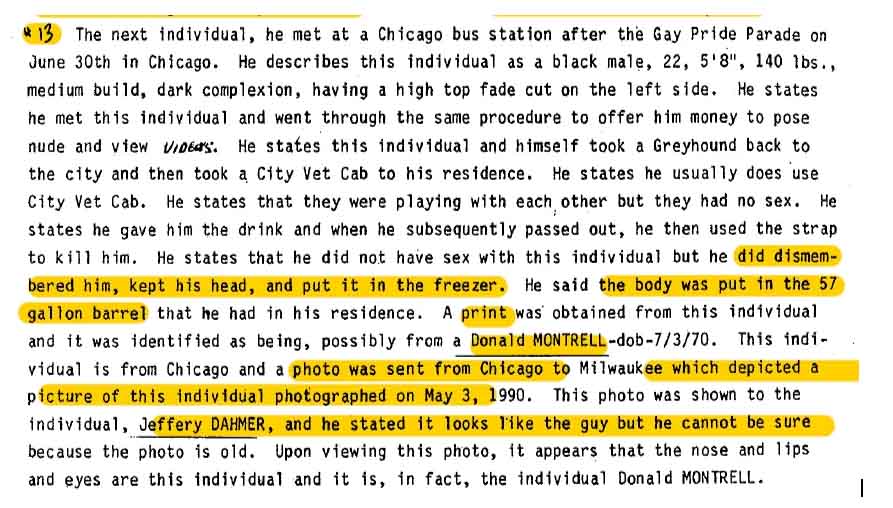
According to one of those reports, Matt Turner, also known as Donald Montrell, was killed on June 30, 1991. Jeff allegedly dismembered him and placed his head in the freezer. His body went somewhere else.
“The body was put in the 57 gallon barrel that he had in his residence,” the report states.
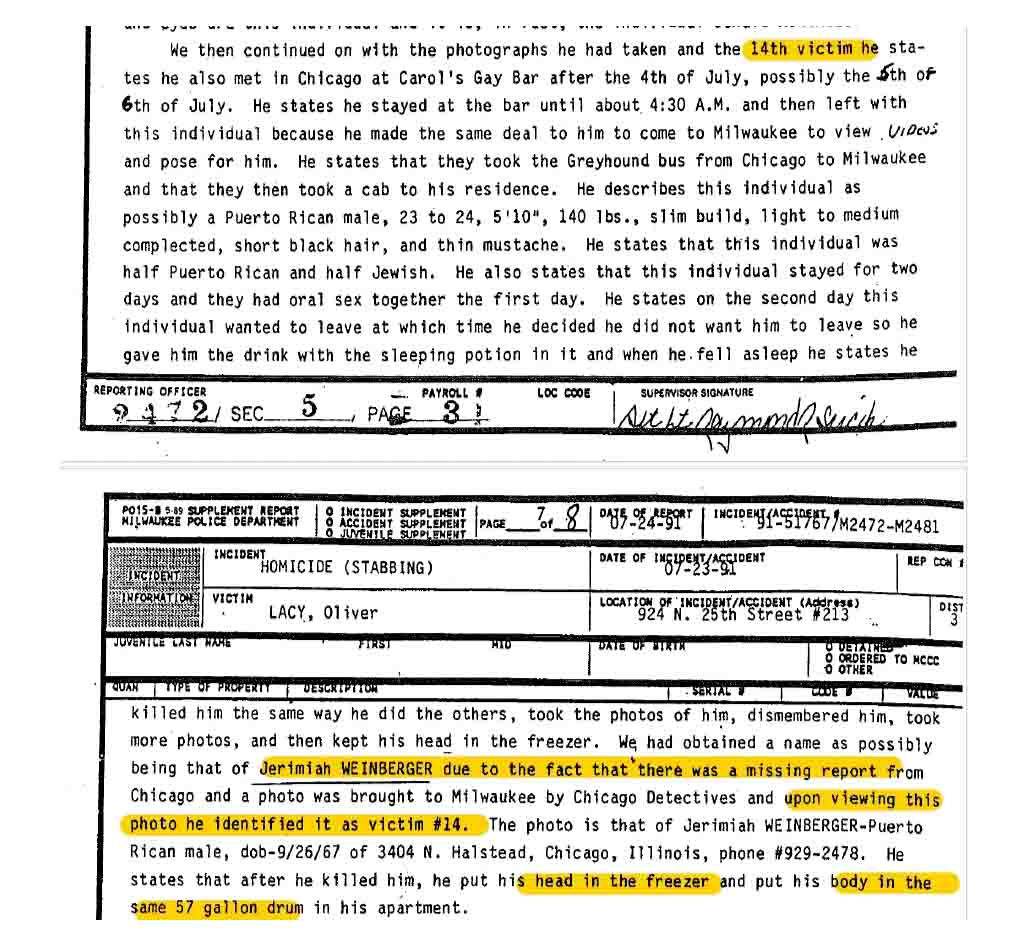
Several days later, Jeff allegedly met Jeremiah Weinberger in Chicago, “possibly the 5th or 6th of July.” Weinberger stayed with him for two days, according to the report, and was killed on the second day.
Again, the head went into the freezer.
And again, the body went into the barrel…“the same 57 gallon drum in his apartment.”
There was only one problem.
The barrel wasn’t there yet.
Jeff bought it on July 12.
Kyle Wahley, the man who sold it to him, testified to the date, starting around 13:00. There was also a receipt.
That leaves several days unaccounted for.
Where were the bodies?
There is an obvious possible answer. Perhaps Turner’s and Weinberger’s bodies were kept in the freezer chest until July 12 and moved into the barrel afterward.
Nothing about that is physically impossible. But the police report doesn’t say it happened.
In fact, the report is quite specific about what went where. Turner’s head: freezer. Body: barrel. Weinberger’s head: freezer. Body: barrel.
A few days later, the same police account describes what allegedly happened to Oliver Lacy, who was supposedly killed on July 15.
This time, there is no ambiguity about where the body went. Lacy’s head was placed in the bottom of the refrigerator. His body was put in the freezer.
That creates a peculiar discrepancy. When the report describes Turner and Weinberger, it specifically separates their remains: their heads went into the freezer, while their bodies went into the barrel. But when it gets to Lacy, the report explicitly says that his body went into the freezer.
So the very explanation that might rescue the earlier chronology – perhaps Turner’s and Weinberger’s bodies were actually stored in the freezer until the barrel arrived – is a storage arrangement the police account plainly knows how to describe.
It just doesn’t describe it for Turner or Weinberger.
Perhaps Jeff told detectives that Turner and Weinberger had also been stored there temporarily, and the officer simply left that detail out. That’s possible. But there’s no way to check because the original interview can’t be replayed. There’s no verbatim transcript to consult. We can’t see whether detectives noticed the problem with the dates, whether they asked Jeff where the bodies had been before July 12, or what he supposedly said in response.
The gap may exist only in the police report. But the gap exists.
And if the bodies weren’t in the freezer, the alternatives become less comfortable.
Turner had allegedly been dead since June 30. Weinberger was allegedly killed roughly two days after a meeting that the report places on July 5 or 6.
The barrel didn’t arrive until July 12.
This was Milwaukee in July. A body stored somewhere in an apartment without refrigeration wouldn’t simply wait. Decomposition would begin. So would odor.
And that brings us back to Vernell Bass.
Bass lived directly across the hall. Jeff allowed him into the apartment. Bass doesn’t describe walking into a home where anything seemed remotely consistent with what was supposedly happening inside.
Then, on July 12, the barrel finally arrived. Ten days remained before Jeff’s arrest.
Sometime during that short interval, Bass says he encountered the barrel himself. He walked over to it and shook it.
He thought it was empty.
None of this establishes where Turner’s or Weinberger’s bodies actually were…assuming, of course, that the underlying account of their deaths is true. As the evidence documented elsewhere on this site shows, there are substantial reasons to question that premise in the first place.
But even if we accept it here for the sake of argument, the barrel creates a narrower problem that’s difficult to explain away.
The surviving police account puts two bodies into a barrel before the documented evidence says that barrel was purchased. Making the chronology work requires an intermediate storage-and-transfer step that the report never describes.
Maybe that step occurred. Maybe Jeff even told police about it. But the surviving record doesn’t say so. And no verbatim confession tells us what was left out.
The barrel, however, is only half the problem. The acid came later.
The Acid Came Even Later
The barrel arrived on July 12.
The acid did not.
Steve Altman testified that Jeff purchased sixteen gallons of muriatic acid on July 20, eight days after buying the barrel and just two days before his arrest. His testimony about the purchase begins at approximately 24:30.
Again, there’s a possible explanation.
Perhaps Turner and Weinberger were still in the freezer chest. Perhaps they had been there all along.
Under that scenario, the barrel could have sat empty after it was purchased on July 12. The bodies could have remained frozen until July 20, when the acid finally arrived.
Then they could have been moved.
It works.
But none of it is in the police account.
The account says the bodies went into the barrel. It doesn’t say they first spent days – or, in Turner’s case, potentially weeks – in the freezer chest. It doesn’t describe their being removed from the freezer on July 20 and transferred into the barrel after the acid was purchased.
Those steps have to be supplied by the reader.
And by then, the calendar has nearly run out.
July 12: the barrel.
July 20: the acid.
July 22: the arrest.
Three dates, ten days.
And somewhere in that same narrow stretch of time, Vernell Bass says he walked over to the blue barrel, put his hands on it, and shook it.
He said it was empty.
Jeff Dahmer’s Apartment Looked Different After the Arrest
Bass’s account becomes stranger when he describes what he saw after Jeff’s arrest.
By then, the apartment across the hall was no longer simply his neighbor’s home. The apartment had become a crime scene.
When Bass looked into the apartment afterward, he noticed things he says had not been there before. Among them were photographs of shirtless or nude men displayed on the walls.
Bass was not seeing the apartment for the first time. He had been inside before the arrest. He knew what the room looked like. And according to him, those photographs were not there before:
What Vernell Bass Heard on the Night of Jeff Dahmer’s Arrest
On the night of the arrest, Vernell Bass was just across the hall. The police were inside Jeff’s apartment. Bass could hear them working.
He could also hear them laughing.
In Across the Hall, page 71, Bass recalls hearing someone ask whether something was “large, medium, or small.”
“Medium,” another voice answered.
Then came more laughter.
At another point (page 85), Bass says, an officer told him about something that had supposedly been found inside a kettle. The officer held up his hands to demonstrate the position of the fingers.
They looked, he told Bass, like “chicken feet.”
There’s one explanation for some of this. Police officers encounter things most people never see, and gallows humor is hardly unknown among people who work around death. A joke overheard from across the hall tells us little by itself.
But Bass describes something else.
The officers were talking to him.
As the search continued, Bass says they gave him what amounted to a running commentary on what they were finding inside his neighbor’s apartment.
It’s worth remembering what police were supposedly discovering on the other side of that doorway.
Human remains.
Evidence of multiple murders.
A crime scene that would soon become notorious around the world.
And Bass wasn’t a detective. He wasn’t part of the search team. He was the neighbor from across the hall. Yet as officers moved through the apartment, he says they talked to him about what they were finding.
And as one of the most infamous crime scenes in American history was supposedly revealing itself for the first time, the sound coming through the doorway was laughter.
The View From Across the Hall
Vernell Bass wasn’t investigating Jeff Dahmer. He was living across the hall. That’s what makes his account so difficult to ignore.
He remembered Jeff opening his door and windows to deal with the smell, borrowing a fan and pushing the air out into the hallway. He remembered being allowed inside the apartment. He remembered shaking the blue barrel and thinking it was empty. He said photographs appeared on the walls after the arrest that had not been there before. And on the night police searched the apartment, he remembered hearing laughter through the open door.
These are not minor details.
They describe the physical world Bass says he actually encountered. And again and again, that world sits uneasily beside the story that would later be told about what had allegedly been happening only a few feet from his own front door.