The Dahmer Case: Protecting the Archdiocese of Milwaukee at Any Cost
There’s a question I can’t get past…
If someone is harmed to protect a religious institution – one believed by some to be essential for eternal salvation – why would that person ever turn to that same institution for salvation? Because the message the person harmed receives isn’t abstract or theological. It’s immediate:
“This institution values itself more than it values truth.”
“It will sacrifice individuals to preserve its image.”
“I am expendable within it.”
That doesn’t create openness to salvation. It creates distance, distrust, and probably permanent rejection. And for good reason.
The person harmed thinks:
Why would I trust anything associated with this?
So you end up with a strange contradiction:
People who believe an institution is necessary for salvation…
trying to preserve access to that salvation – i.e. saving it from scandal –
by making that access psychologically impossible for someone else…someone outside the institution.
In other words, they defeat their own stated goal.
Why would anyone do that?
Maybe they believe the institution must survive at all costs?
Maybe they think one person’s harm is unfortunate, but the larger mission matters more?
Maybe they believe truth itself is secondary to preserving faith in the structure?
But there’s an ethical problem here.
If an institution claims to be necessary for salvation, but its preservation requires harming people…what exactly is being preserved? At that point, the logic becomes very clear. One person absorbs the harm so the institution can continue.
How is this meaningfully different from tossing some unlucky bastard into a volcano to appease the gods?
And there’s something else…
What happens when the act meant to protect the institution ends up damaging it…once someone sees through the ruse?
These aren’t abstract questions.
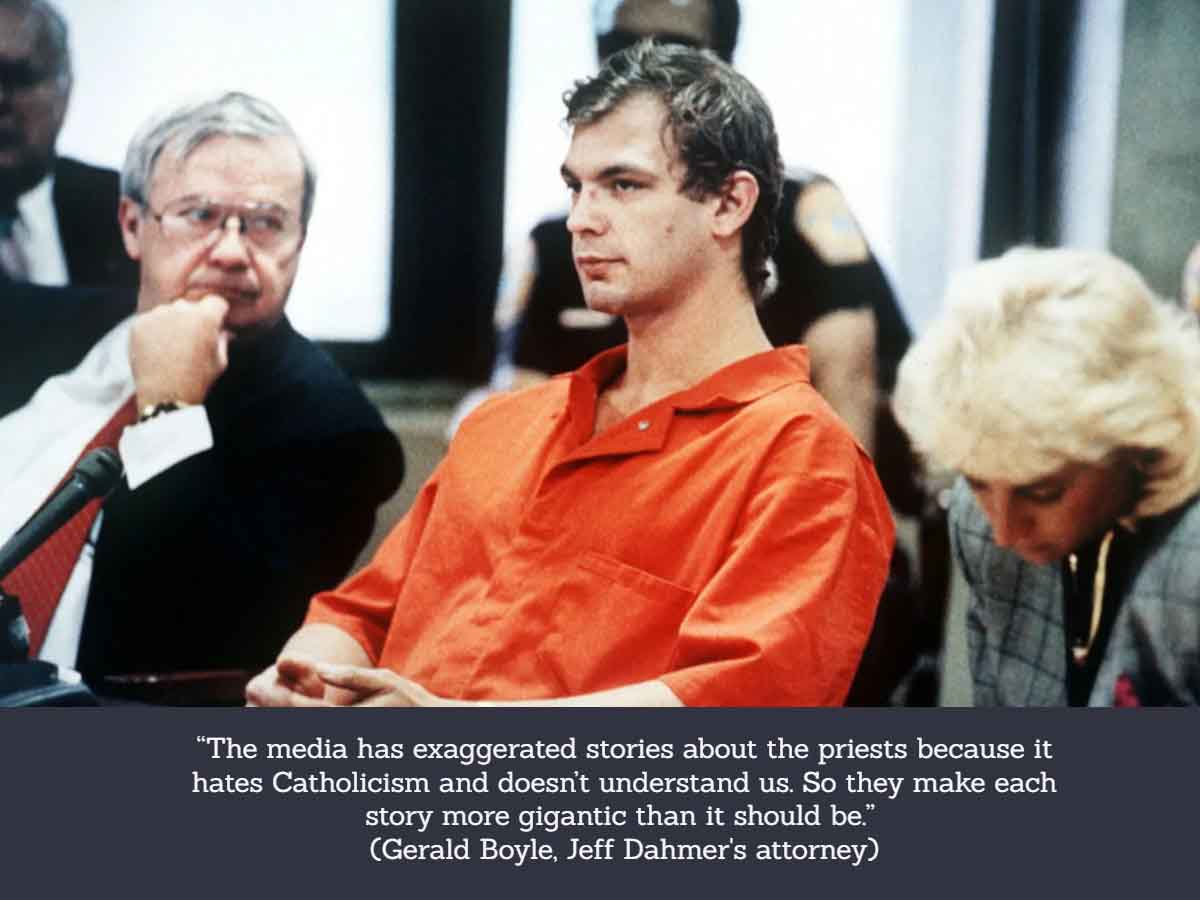
They become very real when you start looking at the Dahmer case…specifically, the overlap between key figures in the case and the Archdiocese of Milwaukee. For example, Gregory O’Meara – one of the prosecutors in the trial – later became a Jesuit priest and is now the rector at Marquette University. He is an expert in legal ethics.