Jeffrey Dahmer and the MKUltra Trap
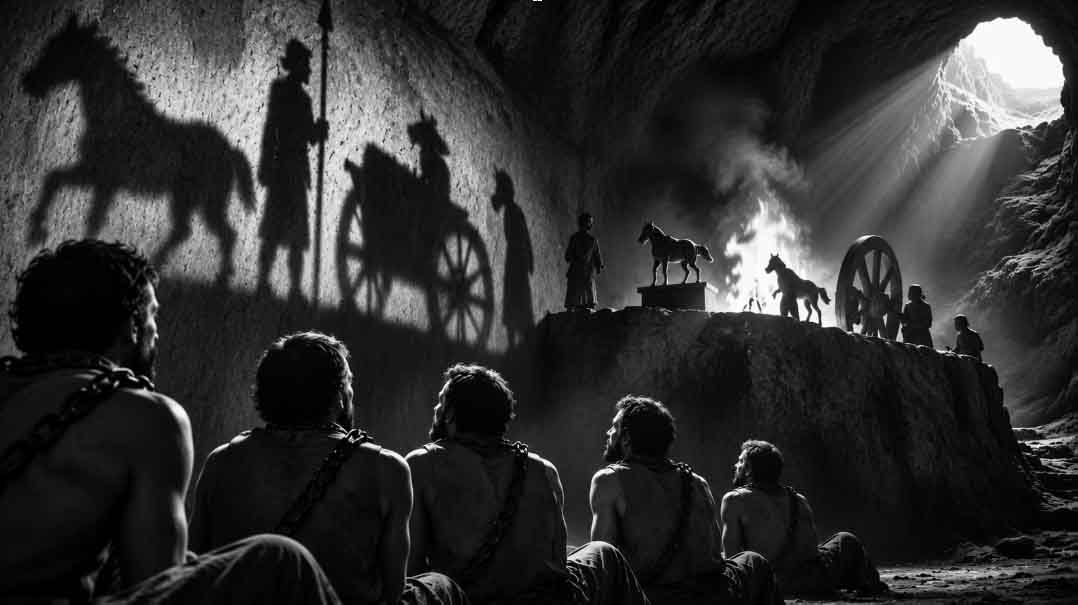
The Skeptic Who Never Leaves the Cave
There’s a version of the Dahmer story that sounds, at first, like a radical challenge to the one most people know. It goes like this:
Jeff Dahmer killed seventeen people. The victims, the apartment, the confession, the physical evidence…it was all real. The crimes happened more or less the way police, prosecutors, and the media said they did.
But Jeff Dahmer didn’t do these things simply because he was a sexually motivated serial killer. He was “programmed.”
Perhaps he was psychologically conditioned. Perhaps drugs or hypnosis were involved. Perhaps he had handlers. Perhaps he was part of MKUltra, or some later program descended from it.
This is usually presented as an alternative theory of the Dahmer case. But notice what it doesn’t question: almost anything.
The murders still happened. The victims are still the victims. The confession still describes real crimes. The evidence still means what authorities said it meant. The prosecution still prosecuted an actual serial killer. The newspapers and television networks still reported the basic facts correctly.
Only the explanation for Jeff Dahmer’s behavior has changed.
The conventional story says Jeff Dahmer murdered seventeen people because he was a sexually motivated serial killer. The MKUltra theory says Jeff Dahmer murdered seventeen people because someone “programmed” him to do it.
Those explanations could hardly sound more different. Yet they begin from exactly the same premise:
Jeff Dahmer murdered seventeen people.
The MKUltra theory therefore skips the most basic question:
Did Jeff Dahmer actually commit these murders?
It assumes the answer is yes and moves immediately to a different question: Why did he do it?
Was it sexual compulsion? Mental illness? Childhood trauma? Psychological conditioning? Mind control? MKUltra? Choose whichever answer you like. The walls of the argument remain exactly where they were.
And that raises a much more interesting question:
What if you can reject the explanation for a story while leaving the story itself completely untouched?
More than two thousand years ago, Plato gave us a remarkably useful way of thinking about that problem.
He called it a cave.
Plato's Cave Wasn't About Stupid People
Plato’s prisoners weren’t stupid. They were reasoning from the world available to them.
They watched the shadows on the wall. They noticed patterns. They learned which shadows followed others. They gave them names. They made predictions. Some of those predictions may even have been correct. A prisoner could become an expert on the shadows, but that wouldn’t get him out of the cave.
The prisoners had no reason to think they were being fooled. The shadows were what they had always seen, so naturally they took them for reality. They could study them, argue about them, and become quite good at predicting what would appear next without ever realizing there was something behind them.
And intelligence doesn’t necessarily solve that problem. In some ways, it can make it worse. A sufficiently clever person can construct an extraordinarily sophisticated explanation for something without ever questioning the assumptions that made the explanation necessary.
He can collect evidence, identify patterns, reject weaker theories, and develop better ones. He can win arguments against other prisoners and still be looking at the wall.
That’s the danger in the Dahmer debate. The question isn’t whether one explanation for the shadows is more sophisticated than another. The question is whether anyone has turned around.
Because before we argue about what caused the shadows, there is another question to ask:
Do the shadows correspond to reality?
MKUltra Was Real. That Isn't the Question.
None of this requires pretending that MKUltra was imaginary. It wasn’t.
MKUltra wasn’t some rumor that grew up around the CIA. It actually existed. Beginning in the 1950s, the CIA explored the use of drugs, hypnosis, and other methods of influencing human behavior, sometimes experimenting on people without their knowledge. We also know that many of the program’s records were later destroyed.
That history matters, but perhaps not in the way the Dahmer-MKUltra theory assumes.
There is no known documentary evidence connecting Jeff Dahmer to MKUltra. No record establishing that he participated in the program, no evidence that he was subjected to an offshoot of it, no documented CIA handler, and no evidence that he was psychologically programmed to commit murder. The fact that MKUltra existed doesn’t establish that Jeff Dahmer was part of it.
But it does establish something else. Government agencies have engaged in secret efforts to manipulate human beings psychologically. They have deceived people, experimented on people without their informed consent, concealed what they were doing, and later destroyed records of those activities.
That makes one particular objection rather difficult to sustain:
They would never do that to someone.
Perhaps the strange thing, then, isn’t that some people suspect manipulation in the Dahmer case. It’s where they stop looking for it.
The MKUltra theory places the manipulation behind the murders: someone manipulated Jeff Dahmer and caused him to become a serial killer. But there is another possibility:
What if the manipulation wasn’t used to create a serial killer? What if it was used to create the story of one?
Why is the first possibility imaginable, while the second is rarely considered even though it’s easier to accomplish?
The existence of MKUltra doesn’t prove either one. But its history does remove one easy objection: that institutions would never deceive or psychologically manipulate people on such a scale. We know they have.
The question is where the manipulation occurred…and that can only be answered by looking at the evidence.

The Question Nobody Asked
So let’s turn around and stop staring at the cave wall.
For more than thirty years, almost every discussion of Jeff Dahmer has begun with the same question:
Why did Jeffrey Dahmer kill seventeen people?
Psychologists tried to answer it. Journalists tried to answer it. Filmmakers tried to answer it. True-crime writers tried to answer it. And eventually, people who distrusted the conventional explanation tried to answer it too.
But there’s a question that has to come first:
What establishes that Jeff Dahmer killed seventeen people?
That question takes us somewhere very different. It takes us away from psychology and toward verification. Instead of trying to understand what was happening inside Jeff Dahmer’s mind, we can examine things that are considerably less mysterious.
Who were the alleged victims, and what do their records show? What exactly is Jeff Dahmer’s confession, and how was it produced? What do the court records establish? What do contemporary records say about the addresses, arrests, and physical evidence at the center of the story? Does the documentary record support the story we’ve been given?
These aren’t exotic questions. They don’t require theories about mind control, secret programs, or psychological pathology. They require records.
And perhaps that’s why they are so easy to overlook. A theory can be fascinating. Verification is usually much less glamorous. But the order matters.
Before explaining an event, first establish that the event happened as described.
Otherwise, we can spend decades developing increasingly sophisticated explanations for something we never stopped to verify.
The Research Trap
There is something seductive about the MKUltra theory: it can make you feel as though you’ve done a great deal of investigation without ever establishing the thing you’re trying to prove.
You can spend months researching MKUltra. You can document CIA experiments, drugs, hypnosis, psychological conditioning, destroyed records and government secrecy. All of that may be perfectly true.
And none of it establishes that Jeff Dahmer was part of it.
That’s the shortcut.
The difficult work isn’t proving that governments have conducted secret psychological experiments. We already know they have. The difficult work is establishing the connection between that history and this particular case.
Without that connection, you’ve researched MKUltra.
You haven’t researched Jeff Dahmer.
Turn Around
Plato’s prisoners could spend their entire lives arguing about the shadows without ever questioning what produced them.
The same danger exists here. The MKUltra theory offers a radically different explanation for Jeffrey Dahmer while leaving the central premise untouched: he killed seventeen people.
But real skepticism doesn’t require a better explanation. Sometimes it requires going back to the beginning and asking whether the thing we’re trying to explain has been established in the first place.
The way out of Plato’s cave isn’t choosing a better shadow. It’s turning around.